The Institution Built the Door: What Two Thousand Years of Betrayal Reveal About the Organizations Left Behind

Photo: Federal Bureau of Investigation, Public domain, via Wikimedia Commons
The Institution Built the Door: What Two Thousand Years of Betrayal Reveals About the Organizations Left Behind
Robert Hanssen sold American intelligence secrets to the Soviet Union and later Russia for more than two decades. He was arrested in 2001. The FBI's subsequent internal review, conducted with the assistance of outside analysts, produced a document that has since become something of a landmark in the literature of institutional failure — not because it identified an unprecedented vulnerability, but because it described, in precise operational detail, a set of organizational conditions that intelligence historians recognized immediately. The same conditions had appeared in every major penetration case in the preceding century.
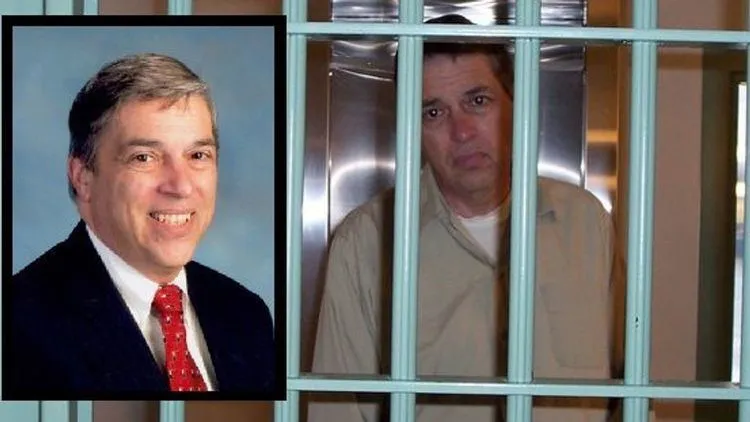 Photo: Robert Hanssen, via alchetron.com
Hanssen was not a uniquely skilled operative. He was an ordinary employee operating within an institution that had, through a series of entirely rational-seeming decisions, constructed a nearly ideal environment for long-term, undetected betrayal. The FBI built the door. Hanssen simply walked through it.
This distinction — between the psychology of the betrayer and the architecture of the betrayed institution — is the one that the historical record most consistently supports and popular accounts most consistently ignore.
The Organizational Conditions That Precede Every Penetration
The study of institutional betrayal across two thousand years of documented cases — from Alcibiades' defection to Sparta in 415 B.C. to the Cambridge Five's decades of service to Soviet intelligence — reveals a set of preconditions so consistent that their presence in any institution should be treated as a structural warning, independent of any suspicion about specific individuals.
 Photo: Alcibiades, via mattsko.files.wordpress.com
The first condition is the valorization of loyalty as a terminal value rather than an instrumental one. Institutions that treat loyalty as the highest possible virtue — rather than as one virtue among several, to be balanced against competence, integrity, and transparency — systematically disable their own detection mechanisms. When questioning a colleague's conduct is culturally coded as disloyalty, the reporting mechanisms that might surface early warning signs go unused. The FBI under J. Edgar Hoover exemplified this dynamic. So did the British intelligence establishment that incubated Kim Philby for thirty years.
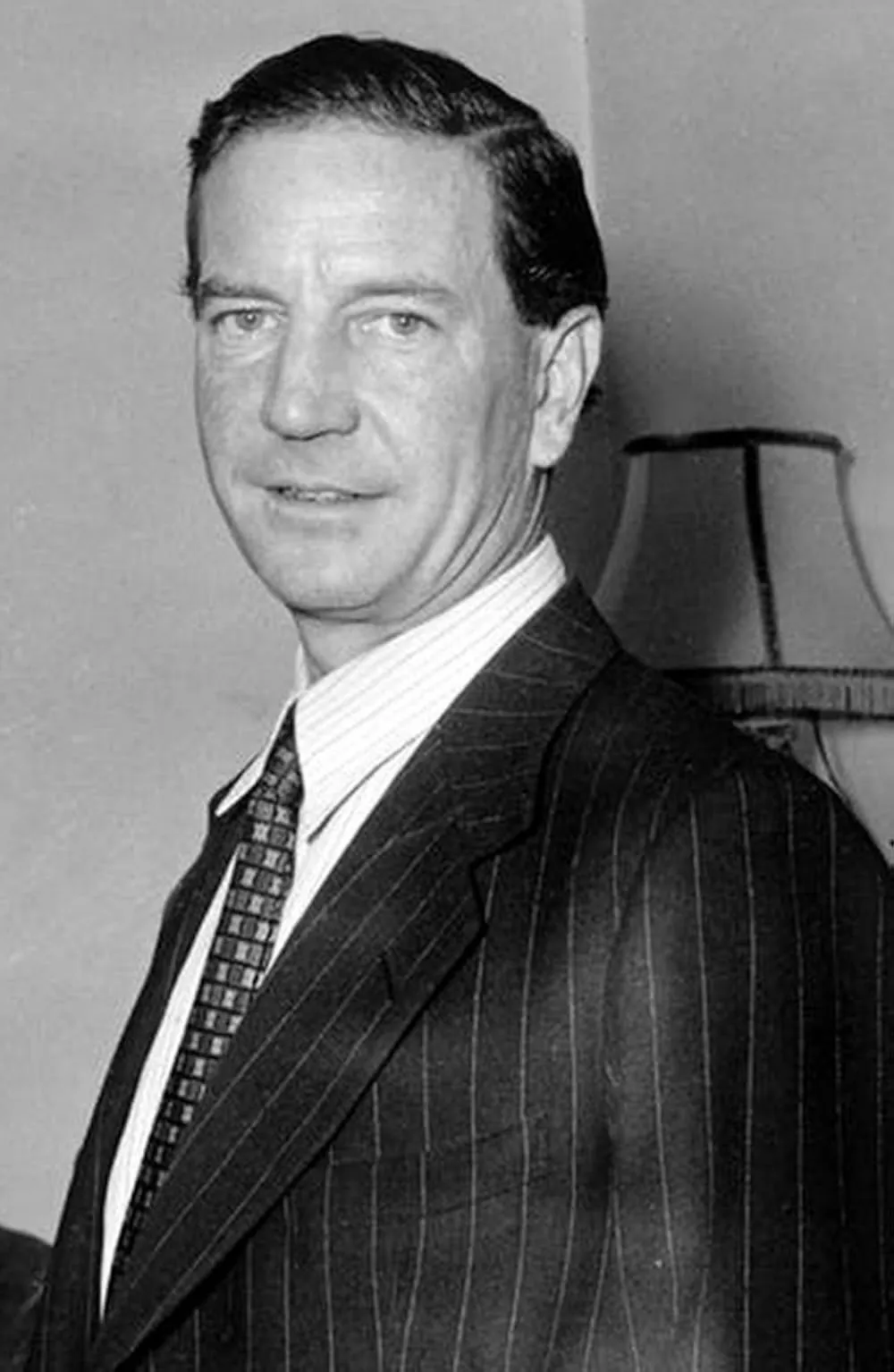 Photo: Kim Philby, via m.media-amazon.com
The second condition is the concentration of access in individuals whose personal trustworthiness is treated as a substitute for structural oversight. Hanssen was permitted to operate with minimal supervision in part because his reputation for religious devotion and personal rectitude was read as a security asset rather than recognized as irrelevant to the question of structural access controls. Philby rose to head the Soviet counterintelligence section of MI6 — making him the person responsible for detecting exactly the kind of operation he was running — because his social credentials and professional reputation had displaced the question of whether his access was structurally appropriate.
The third condition, and perhaps the most consistently documented, is the institutional tendency to resolve cognitive dissonance in favor of the preferred interpretation. Both the CIA and MI6 received multiple credible warnings about Philby's activities before his eventual exposure and flight to Moscow in 1963. Each warning was processed through an institutional framework that treated the possibility of his guilt as more threatening than the possibility of his innocence — not because decision-makers were incompetent, but because the social and professional costs of being wrong about a trusted colleague were, within the institution's incentive structure, higher than the costs of ignoring a warning that might be false.
Alcibiades and the Structural Invitation
The case of Alcibiades — the Athenian general and statesman who defected to Sparta in 415 B.C. following accusations of sacrilege, subsequently advised Sparta against his own city, then defected again to the Persian satrap Tissaphernes, and eventually returned to Athenian command — is the oldest extensively documented betrayal case in Western history. It is also, in structural terms, one of the most instructive.
Thucydides' account makes clear that Athens had created the conditions for Alcibiades' defection long before he acted. The city's factional politics had made it impossible for him to defend himself against the sacrilege charges without a fair hearing; the hearing was denied; and the alternative to defection was execution. The Athenian assembly, in other words, had constructed an incentive structure in which defection was the rational response to institutional persecution.
This pattern — the institution creating conditions under which betrayal becomes the individually rational choice — recurs with striking regularity across the historical record. Aldrich Ames, the CIA officer who sold the identities of Soviet assets to Moscow beginning in 1985, later described an institutional environment in which his known alcohol problem, financial difficulties, and erratic performance had been systematically overlooked for years because he possessed specialized knowledge that made him difficult to replace. The institution's dependence on him had, in effect, purchased his immunity from the scrutiny that might have detected his activities earlier.
The Discovery Delay as Diagnostic
One of the most consistent features of documented betrayal cases is the extraordinary length of time between the beginning of the betrayal and its discovery. Hanssen operated for twenty-two years. Philby for approximately the same period. The Cambridge Five as a network for more than two decades. Ames for nine years despite a lifestyle that was conspicuously inconsistent with his government salary.
This discovery delay is itself a diagnostic. It does not indicate exceptional tradecraft on the part of the betrayers — the historical record suggests that most of them were not particularly sophisticated in their operational security. It indicates that the institutions they penetrated were not, in any meaningful functional sense, looking for them.
The reasons for this institutional blindness are consistent across cases. Counterintelligence functions are structurally subordinate within most intelligence and security organizations, because they generate friction with the operational and analytical functions that produce the outputs leadership values. Investigating your own colleagues is expensive, disruptive, and damaging to morale. The institutional incentives run strongly against it, and they run against it in exactly the same way in every documented case.
What the Pattern Requires of Institutions
The practical implication of two thousand years of documented betrayal is uncomfortable but clear: the question an institution should ask is not "do we have trustworthy people?" but "have we built a structure in which an untrustworthy person could operate undetected, and for how long?"
These are different questions, and the historical record suggests that most institutions ask only the first. The valorization of loyalty, the substitution of personal reputation for structural oversight, and the systematic avoidance of internal scrutiny are not pathologies unique to intelligence agencies. They are features of any institution that has existed long enough to develop a culture — which is to say, virtually every institution of consequence.
Human psychology has not changed. The tendency to trust familiar faces, to treat social credentials as security proxies, and to resolve ambiguous evidence in favor of the preferred conclusion is as present in contemporary American organizations as it was in the Athenian assembly that drove Alcibiades to Sparta. The betrayer is a symptom. The institution is the condition. And the condition, unlike the betrayer, can be addressed before the damage is done.