The Mercy Trap: Why Executive Clemency Has Always Been a Declaration of War

The word 'pardon' derives from a Latin root meaning to give freely, without condition. In practice, the American executive pardon has never been free of conditions — it has always carried a price, and that price has almost always been paid by someone other than the person receiving the clemency.
This is not a modern corruption of the institution. It is the institution, operating exactly as political psychology predicts it will.
What the Framers Built and What They Missed
Alexander Hamilton argued in Federalist No. 74 that the pardon power was essential precisely because 'the criminal code of every country partakes so much of necessary severity that without an easy access to exceptions in favor of unfortunate guilt, justice would wear a countenance too sanguinary and cruel.' The logic was sound. A legal system that cannot correct its own errors needs a human override.
What Hamilton's analysis did not fully account for was the distinction between correcting errors and declaring political outcomes. When a president pardons a private citizen whose conviction was genuinely unjust, the act performs exactly as Hamilton described. When a president pardons a political ally, a predecessor, or a figure whose prosecution was itself a political event, the pardon does not close a chapter. It rewrites it — and everyone who read the original chapter knows the text has been altered.
This distinction was not hypothetical for long. The Constitution was ratified in 1788. The first genuinely explosive use of executive clemency came within a decade.
The Whiskey Rebellion Precedent
In 1794, George Washington suppressed the Whiskey Rebellion with federal troops — the first and, for a long time, only instance of a sitting president personally leading an army in the field. Two leaders of the rebellion, Philip Weigel and John Mitchell, were convicted of treason and sentenced to death. Washington pardoned both.
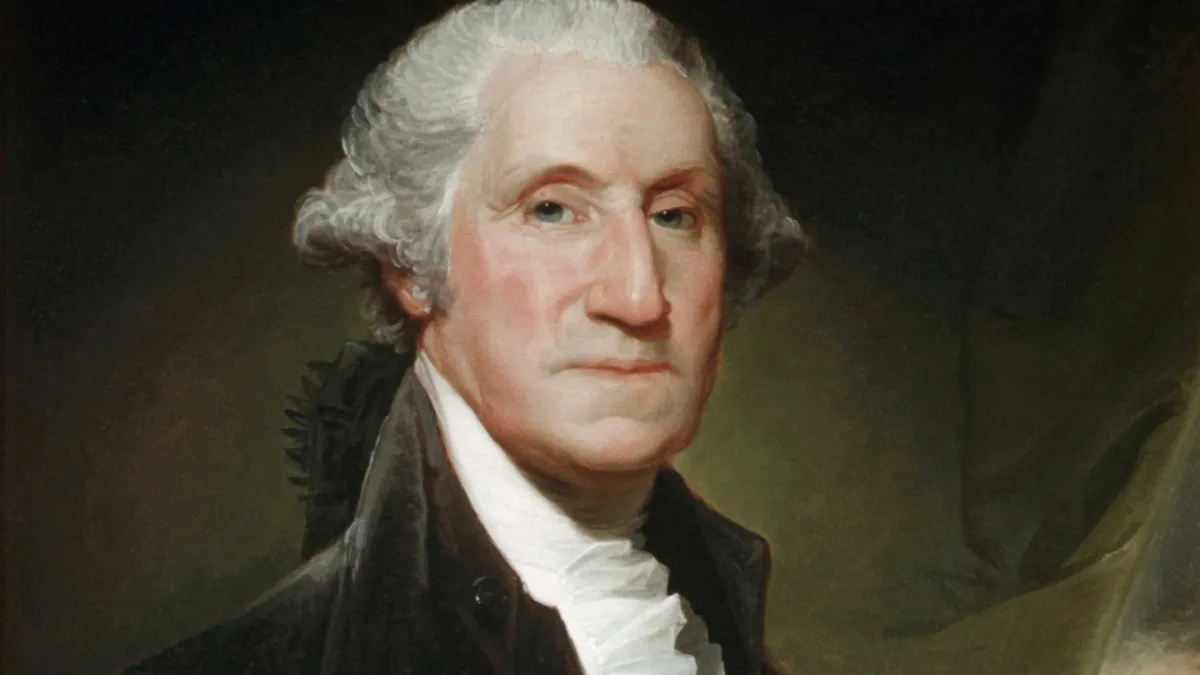 Photo: George Washington, via res.cloudinary.com
The pardons were presented as mercy. They were also a precise political calculation: executing the men would have created martyrs; pardoning them demonstrated federal authority while denying the rebellion the symbolic victory of producing victims. The mercy was real. So was the message, which was directed not at Weigel and Mitchell but at every future population that might consider similar resistance.
The pardon announced that the federal government was strong enough to be generous. That is a different thing from announcing that the federal government had forgiven anything.
Reconstruction and the Pardon That Undid a War
The most consequential clemency episode in American history is also the least discussed in the context of executive power. Between 1865 and 1872, Andrew Johnson and then Ulysses Grant issued a cascading series of amnesties to former Confederate officers, officials, and soldiers that progressively restored civil and political rights to the defeated rebellion's leadership.
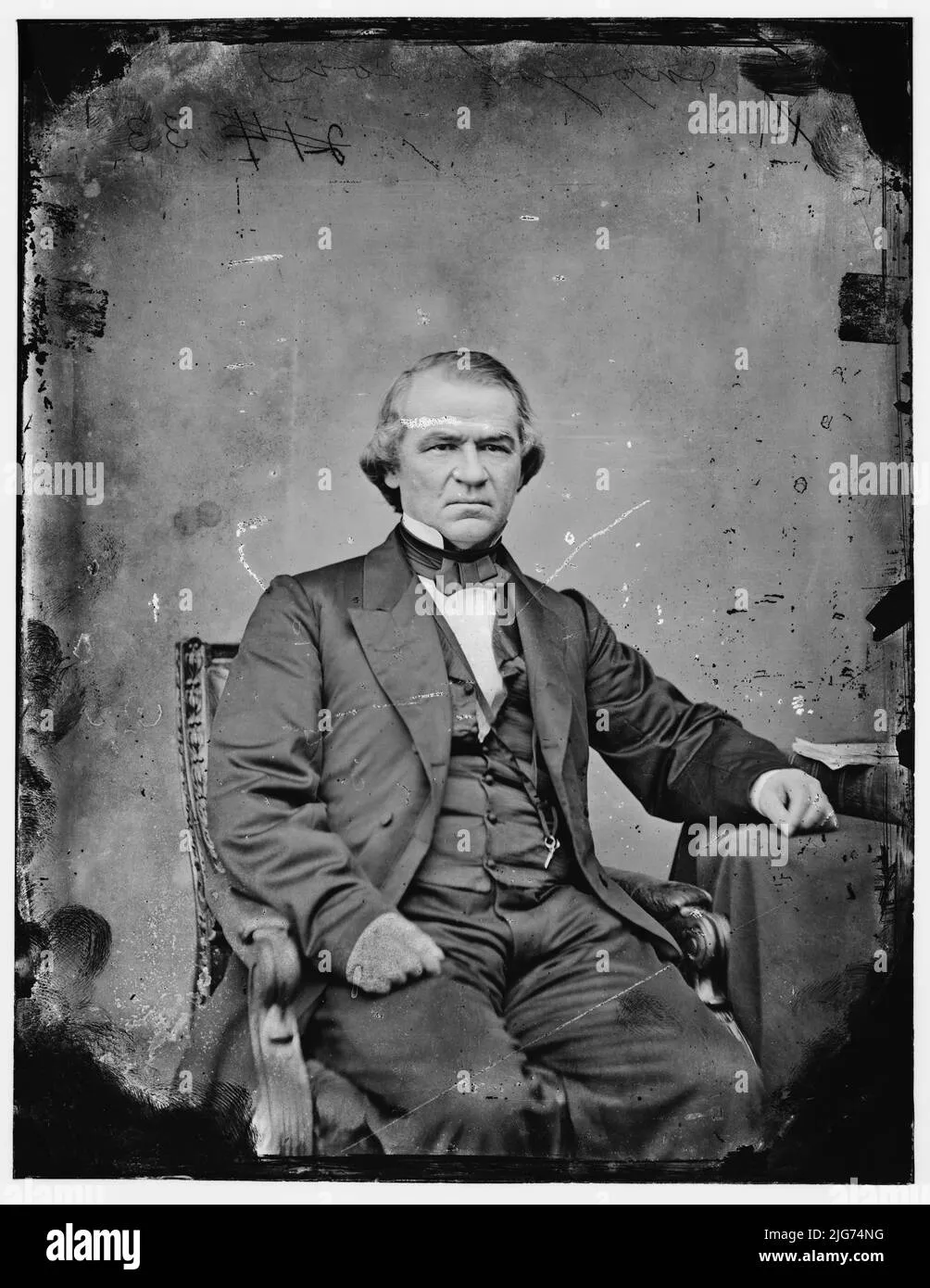 Photo: Andrew Johnson, via c8.alamy.com
Johnson's Christmas Proclamation of 1868 granted unconditional amnesty to all who had participated in 'the late rebellion.' The practical effect was to return political control of the former Confederate states to the men who had led the secession, within a decade of Appomattox, and to do so through the mechanism of executive mercy rather than through democratic deliberation.
The pardons were framed as national reconciliation. What they functioned as, in practice, was a reversal of the war's political settlement without the inconvenience of losing a second war. The Reconstruction amendments — the Thirteenth, Fourteenth, and Fifteenth — remained on the books. The political class empowered to administer them in the South was, after the amnesties, composed largely of the men those amendments were designed to constrain.
No battlefield victory achieved what the pardon pen accomplished between 1865 and 1877. This is not an argument about the wisdom or justice of Reconstruction policy. It is an observation about what the clemency power can do when it is wielded at scale against a political settlement rather than on behalf of an individual.
Ford, Nixon, and the Wound That Would Not Close
Gerald Ford's pardon of Richard Nixon on September 8, 1974 — issued before any charges were filed, covering all federal crimes Nixon 'committed or may have committed' during his presidency — is the modern case study for everything the historical pattern predicts.
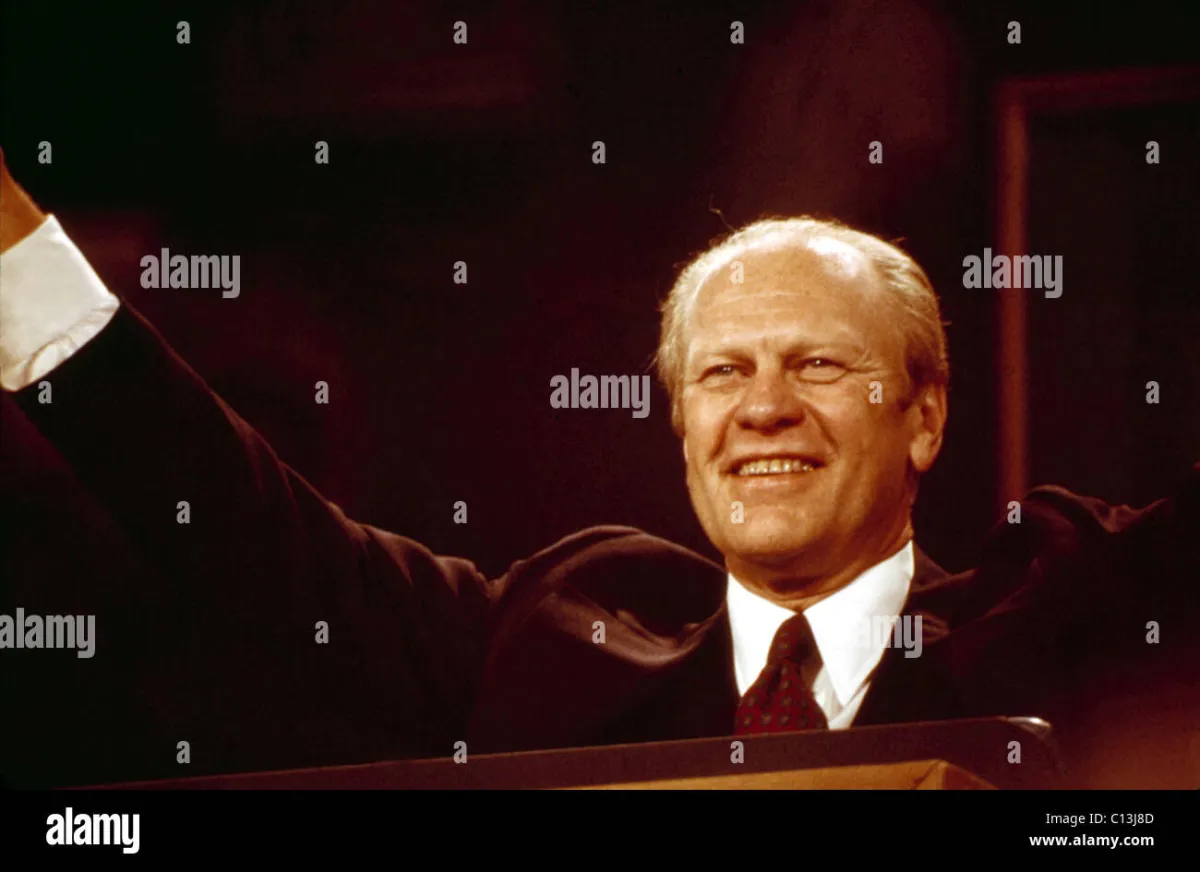 Photo: Gerald Ford, via c8.alamy.com
Ford's stated rationale was that a prolonged criminal prosecution would consume the nation's attention, prevent healing, and constitute a form of double punishment for a man who had already lost the presidency. The reasoning was coherent. It was also, as Ford himself acknowledged late in his life, the probable cause of his 1976 electoral defeat.
What Ford did not anticipate — or anticipated and accepted — was that the pardon would be read not as mercy but as confirmation. For the substantial portion of the American public that believed Nixon's crimes extended beyond the man himself to a system of power that had not been held accountable, the pardon was not a closing of accounts. It was evidence that the accounts would never be opened.
The pardon did not end the argument about Watergate. It transferred the argument from the question of Nixon's guilt to the question of whether the rule of law applied equally to the powerful — a question that proved considerably more durable and considerably more corrosive.
The Mechanism, Stated Plainly
The historical pattern is consistent enough to state as a principle: a pardon directed at a private individual whose prosecution was not itself political tends to function as intended — as a correction of error or an expression of proportionate mercy. A pardon directed at a figure whose prosecution was politically charged functions as a political act regardless of its author's intent, because its audience will read it as one.
This is not a design flaw in the pardon power. It is a feature of how human communities process official acts. Political psychology has not changed in five thousand years of recorded governance. People do not evaluate official decisions in isolation; they evaluate them as signals about what the future will look like and who will be permitted to shape it.
A pardon of a political figure communicates three things simultaneously: that the pardoning authority has the power to issue it, that the pardoning authority has chosen to use that power in this direction, and that the conduct being pardoned will not, in this authority's judgment, be treated as disqualifying. All three communications are received and interpreted by every other actor in the political system, regardless of what the pardoning document actually says.
The Perennial Lesson
The American constitutional system gave the executive branch nearly unreviewable clemency power because the founders understood that rigid systems break in ways that flexible ones do not. That was a correct assessment of institutional design.
What five thousand years of political history adds to that assessment is this: the flexibility that makes a system resilient is the same flexibility that makes it exploitable. The pardon is a tool. Like all tools, its moral valence is determined entirely by what it is used to build or demolish — and the demolition, when it comes, rarely announces itself as such. It arrives wearing the vocabulary of healing, closure, and national unity, which is precisely why the historical record is the only reliable instrument for identifying it.