Bonds, Dirt, and Broken Promises: The Infrastructure Seduction That Never Gets Old
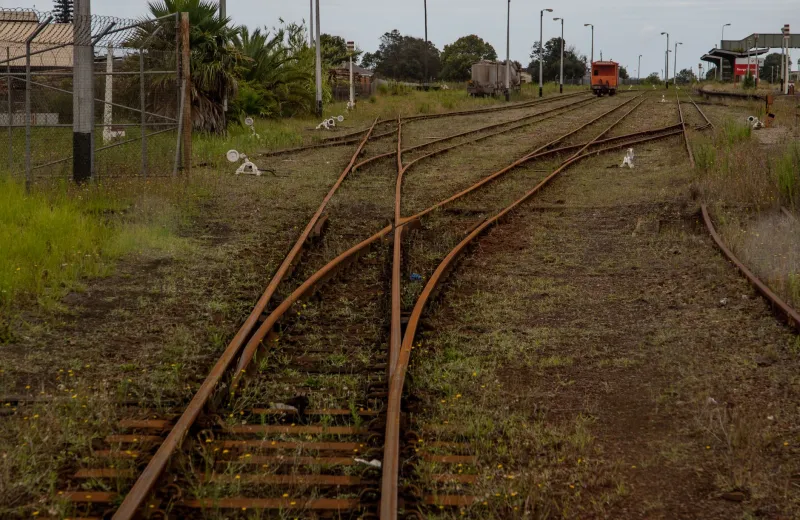
Somewhere in a county courthouse in rural Illinois, there is a bond ledger from 1853 that records a town's decision to mortgage its future for a railroad that never came. The town is gone. The ledger remains. If you know where to look, you will find its functional equivalent in a municipal broadband contract from 2019, signed in a county courthouse in rural Kentucky, for a fiber-optic network that was promised in eighteen months and has not yet arrived.
The technology changed. The transaction did not.
The Original Grift and Its Mechanics
The railroad era of the 1840s and 1850s produced what may be the most successful recurring confidence scheme in American economic history — not because its perpetrators were uniquely clever, but because they understood something fundamental about how isolated communities process risk and reward.
The pitch was structurally elegant. A railroad promoter would arrive in a struggling town and present a vision: the line was coming through the region regardless, but its precise route was still being determined. Towns that demonstrated commitment — through bond issuances, land grants, or direct tax levies — would attract the route. Towns that hesitated would be bypassed, left to wither while their neighbors prospered.
This framing did two things simultaneously. It made participation feel like an investment and inaction feel like certain death. The asymmetry was manufactured, but it felt mathematically real to every town council that encountered it.
Between 1840 and 1870, American municipalities issued an estimated $300 million in railroad bonds — a sum that would exceed $10 billion in today's dollars. A substantial portion of those bonds financed lines that were never built, were built to serve the promoter's land speculation rather than the town's commerce, or were built and then immediately abandoned when the speculative bubble collapsed. The Panic of 1873 left hundreds of American counties paying debt service on infrastructure that either did not exist or had already rusted into the ground.
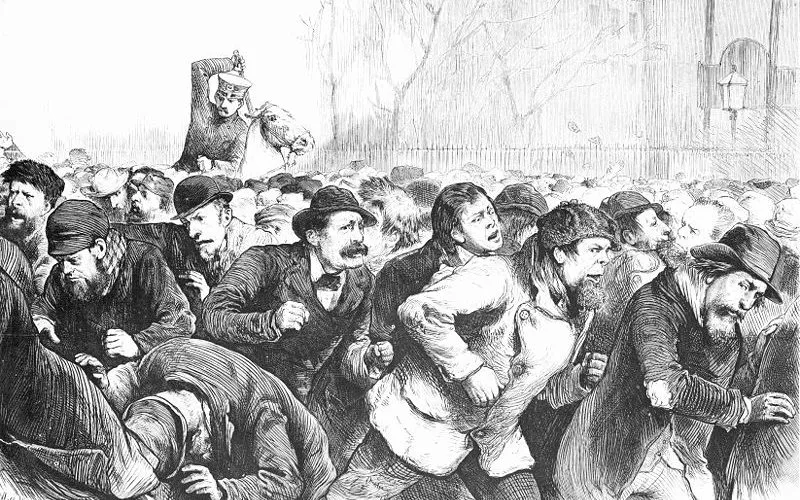 Photo: Panic of 1873, via gohighbrow.com
The Pattern Restates Itself
The specific commodity changes on roughly a forty-year cycle, which is long enough that institutional memory fades and short enough that the same psychological conditions reliably reassemble.
In the 1920s and 1930s, the promise was highways. Communities competed ferociously for U.S. Route designations, offering rights-of-way, graded land, and local funding matches. The towns that won their routes often discovered that highway traffic bypassed their existing commercial districts rather than feeding them, hollowing out the downtowns they had sacrificed to attract the road in the first place.
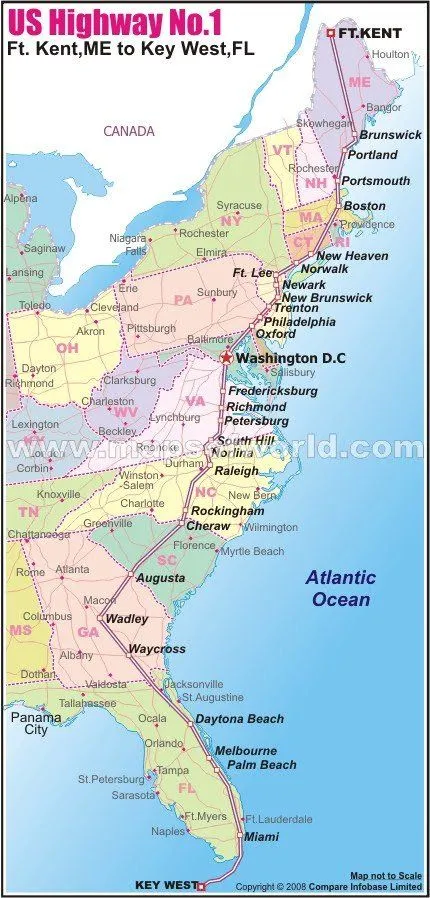 Photo: U.S. Route, via i.pinimg.com
In the 1990s, the commodity was the information superhighway. Hundreds of municipalities signed franchise agreements with cable companies that promised symmetrical broadband, interactive services, and digital infrastructure — in exchange for exclusive operating territories and, in many cases, direct subsidies. The symmetrical broadband did not arrive for decades, and the exclusive territories prevented competition that might have compelled it.
In the 2010s, the promise was gigabit fiber. Google Fiber's expansion announcements triggered bidding wars among American cities, each offering conduit access, permitting concessions, and marketing support. Google Fiber retreated from most of its announced markets. The cities that had restructured their permitting regimes and negotiated away leverage in anticipation of its arrival were left with neither the fiber nor their original bargaining position.
 Photo: Google Fiber, via www.gizmochina.com
The current iteration involves both broadband — specifically the $42 billion in federal BEAD program funding flowing through state agencies — and electric vehicle charging infrastructure, where rural counties are once again being asked to commit local matches, easements, and political capital for federal projects whose completion timelines and actual routing remain flexible until after the commitments are secured.
Why the Evidence Never Wins
The obvious question is why communities keep accepting these terms when the historical record is so consistently unfavorable. The answer is not ignorance, though ignorance is a convenient explanation for those who prefer not to examine the underlying psychology.
Human beings do not weigh probabilistic outcomes by multiplying probability times magnitude and selecting the highest expected value. That is not how the brain works, and five thousand years of recorded human behavior confirms it. What human beings actually do — what they have always done — is compare the pain of the present against the imagined relief of a specific future, and when the present is sufficiently painful, the imagined future wins regardless of its probability.
A town with a declining tax base, a closed factory, and an emptying school district is not in a position to apply actuarial reasoning to an infrastructure proposal. It is in a position to feel that this proposal is the last available exit before the road ends. That feeling is not stupidity. It is a predictable output of cognitive architecture that evolved under conditions where the certain cost of inaction frequently exceeded the uncertain cost of a risky bet.
The promoter — whether a railroad speculator in 1853 or a fiber-optic developer in 2023 — does not need to deceive the town council. The council will largely deceive itself, because the alternative to hope is an accounting of decline that no elected official can survive presenting to constituents.
What the Ledger Actually Shows
The consistent historical outcome is not that infrastructure promises always fail. Some railroads were built, some fiber was laid, some highways did revitalize the towns they connected. The problem is that the communities which benefited most were rarely the ones that paid the most to attract the investment. The towns that granted the largest land subsidies to railroads often found those railroads pricing freight at rates that extracted the subsidy back over time. The cities that offered Google Fiber the most favorable terms were, in several documented cases, the ones it abandoned first when the economics tightened.
The ledger shows something that every generation of American municipal officials has had access to and consistently chosen not to consult: when a private party requires a public subsidy to make an investment viable, the subsidy does not make the investment viable. It makes the investment happen at the public's expense regardless of whether it succeeds.
The courthouse in rural Illinois does not teach this lesson because the town that built it is gone. That is, in a sense, the lesson — but it requires reading the absence, and absences are difficult to study when you are standing in the middle of one.
The Perennial Conclusion
The infrastructure promise works because it arrives precisely when communities are least equipped to evaluate it. That timing is not accidental. It is the oldest targeting mechanism in the commercial record: find the entity whose need is greatest, present yourself as the solution, and secure the commitment before the need subsides enough to permit clear thinking.
History does not suggest that communities should refuse all infrastructure investment or treat every development proposal as fraud. It suggests something more precise: that the terms of any deal in which the public bears the downside risk and a private party captures the upside should be examined not with the optimism of the desperate but with the cold arithmetic of someone who has read the 1853 ledger and understood what it means that the town no longer exists to pay the debt.