The Patron Saint's Paradox: When Championing a Cause Becomes a Death Sentence

The Architecture of Destruction
In 1906, Upton Sinclair published "The Jungle," a novel intended to expose the brutal working conditions in Chicago's meatpacking industry. Instead, readers fixated on his graphic descriptions of unsanitary food processing. The book triggered a national outcry that led directly to the Pure Food and Drug Act and the creation of what would become the FDA.
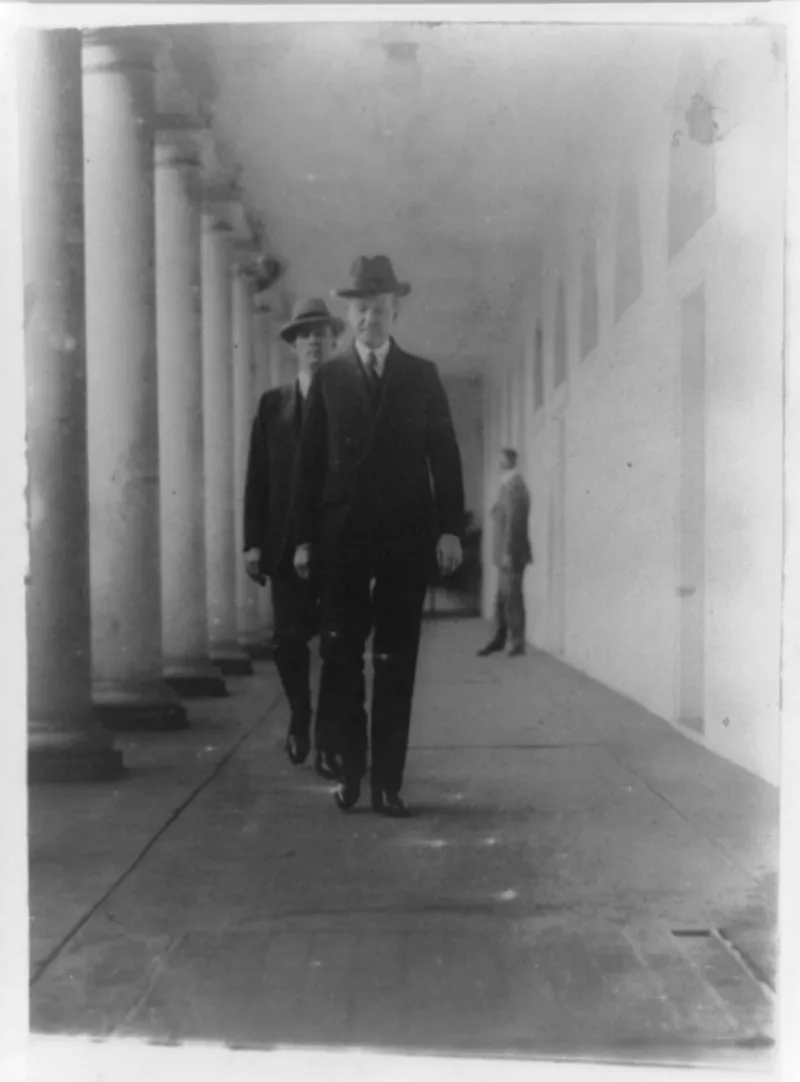
 Photo: Upton Sinclair, via i.etsystatic.com
Sinclair should have been celebrated as the father of food safety regulation. Instead, he spent the remaining forty-two years of his life watching his reputation systematically destroyed by the very regulatory apparatus he had created. When government inspectors found problems in food production, critics blamed Sinclair for not exposing enough. When regulations proved inadequate, they blamed him for not pushing harder. When the FDA expanded beyond his original vision, they blamed him for starting the process.
Sinclair's trajectory illustrates one of history's most consistent and cruel patterns: the reformer who becomes personally identified with a cause will inevitably be consumed by that cause's success or failure.
The Identification Trap
This pattern appears with forensic consistency across different industries and time periods. The mechanism is always the same: a individual achieves prominence by championing a particular reform, technology, or movement. Their personal reputation becomes inseparable from that cause's public perception. When the cause evolves beyond their control — as all successful movements must — they become the lightning rod for every criticism, unintended consequence, and inevitable disappointment.
Consider Ralph Nader, whose 1965 book "Unsafe at Any Speed" launched the modern consumer protection movement. Nader's campaign against the Chevrolet Corvair led to landmark automotive safety legislation and the creation of the National Highway Traffic Safety Administration. For two decades, he was America's most trusted consumer advocate.
Then the movement he created grew beyond his ability to control it. Consumer advocacy groups multiplied, each claiming Nader's mantle while pursuing their own agendas. Regulatory agencies expanded their scope in ways Nader never intended. When these organizations made mistakes or overreached, critics didn't blame the institutions — they blamed Nader for creating them.
By the 1990s, the man who had saved thousands of lives through automotive safety improvements was being portrayed as a dangerous extremist whose movement had gone too far. His 2000 presidential campaign, which received less than 3% of the vote, marked the complete transformation of a beloved reformer into a public pariah.
The Silicon Valley Prophecies
The technology industry provides the most recent and perhaps most dramatic examples of this pattern. The entrepreneurs and evangelists who promised to democratize information, connect the world, and empower individuals have become the most vilified figures in American business.
Mark Zuckerberg spent the first decade of Facebook's existence positioning himself as a champion of global connectivity and democratic participation. He testified before Congress about the platform's potential to promote free speech and political engagement. He gave interviews about Facebook's mission to "bring the world closer together."
 Photo: Mark Zuckerberg, via wallpapers.com
When that mission succeeded beyond his wildest projections, it created problems he never anticipated: foreign election interference, algorithmic radicalization, privacy violations, and mental health impacts among teenagers. These weren't failures of his original vision — they were inevitable consequences of its success.
But because Zuckerberg had made himself the personal embodiment of social media's democratic promise, he became personally responsible for every negative outcome. Critics don't blame social media as a technology or Facebook as an institution — they blame Zuckerberg for creating something that grew beyond anyone's ability to control.
The same pattern destroyed other Silicon Valley evangelists. Google's founders promised to "organize the world's information and make it universally accessible." When that mission succeeded, it created new forms of surveillance capitalism and information monopolization. Twitter's founders promised to democratize communication and give everyone a voice. When that succeeded, it amplified misinformation and political polarization.
Each of these entrepreneurs achieved exactly what they set out to accomplish. Their destruction came not from failure, but from success that exceeded their ability to manage its consequences.
The Historical Precedent
This pattern predates the internet by centuries. During the Progressive Era, numerous reformers suffered identical fates. Ida Tarbell's investigation of Standard Oil led to antitrust legislation that broke up the company. But when subsequent antitrust enforcement proved inadequate or was applied inconsistently, critics blamed Tarbell for not doing enough to prevent future monopolization.
Lincoln Steffens exposed municipal corruption in dozens of American cities, leading to widespread political reforms. When those reforms failed to eliminate corruption entirely — as no reform could — critics accused Steffens of naive optimism and blamed him for the continued existence of the problems he had spent his career fighting.
The pattern extends internationally. Mikhail Gorbachev introduced glasnost and perestroika to reform the Soviet system. When these policies led to the Soviet Union's complete collapse, he was blamed both by those who wanted the USSR to survive and by those who thought its dissolution was too chaotic.
The Psychological Mechanism
Why does this pattern repeat with such consistency? The answer lies in how human psychology processes institutional change. When a reform movement succeeds, it creates new institutions, new power structures, and new problems. The public needs someone to hold accountable for these changes, and they invariably choose the individual most closely associated with the original reform.
This represents a cognitive shortcut. It's easier to blame a single person than to understand the complex institutional dynamics that produce unintended consequences. It's more satisfying to hold a specific individual responsible than to acknowledge that all social change creates new problems that require additional solutions.
The reformer's deep personal identification with their cause makes them the perfect target for this psychological need. They can't distance themselves from the movement without appearing to abandon their principles. They can't control how the movement evolves without being accused of authoritarianism. They become trapped by their own success.
The Goodwill Debt
The cruelest aspect of this pattern is how it inverts the reformer's greatest asset. The public goodwill that enables their initial success becomes a liability when things go wrong. The more beloved and trusted they were at their peak, the more devastating their eventual fall.
This explains why the most successful reformers suffer the most complete destruction. Figures like Nader and Zuckerberg weren't destroyed by their enemies — they were destroyed by disappointed former supporters who felt personally betrayed when the movements they had championed produced unexpected results.
The goodwill account that took decades to build gets depleted in months or years. Every past achievement becomes evidence of naive optimism or deliberate deception. Every good intention gets reinterpreted as manipulation or self-interest.
The Inevitable Cycle
Understanding this pattern doesn't prevent it from recurring. New reformers continue to emerge, champion causes, achieve success, and face destruction when their movements evolve beyond their control. The cycle appears immune to historical awareness because it serves essential psychological and social functions.
Society needs reformers to identify problems and catalyze change. But it also needs scapegoats to blame when change produces unintended consequences. The same individuals serve both functions in sequence, creating a reliable mechanism for processing the anxiety that accompanies all social transformation.
The pattern will continue because human psychology hasn't changed in five thousand years. The next generation of reformers will achieve prominence, create movements that exceed their ability to control, and face the same destruction that has consumed their predecessors throughout history.