The Innovation Lottery: Why History Forgets the Equally Brilliant Runners-Up

The Forgotten Laboratory
In 1876, Elisha Gray arrived at the U.S. Patent Office with detailed plans for a device that could transmit human speech over electrical wires. He was precisely four hours too late. Alexander Graham Bell had filed his telephone patent that same morning, securing his place in history while relegating Gray to a footnote that most Americans have never heard.
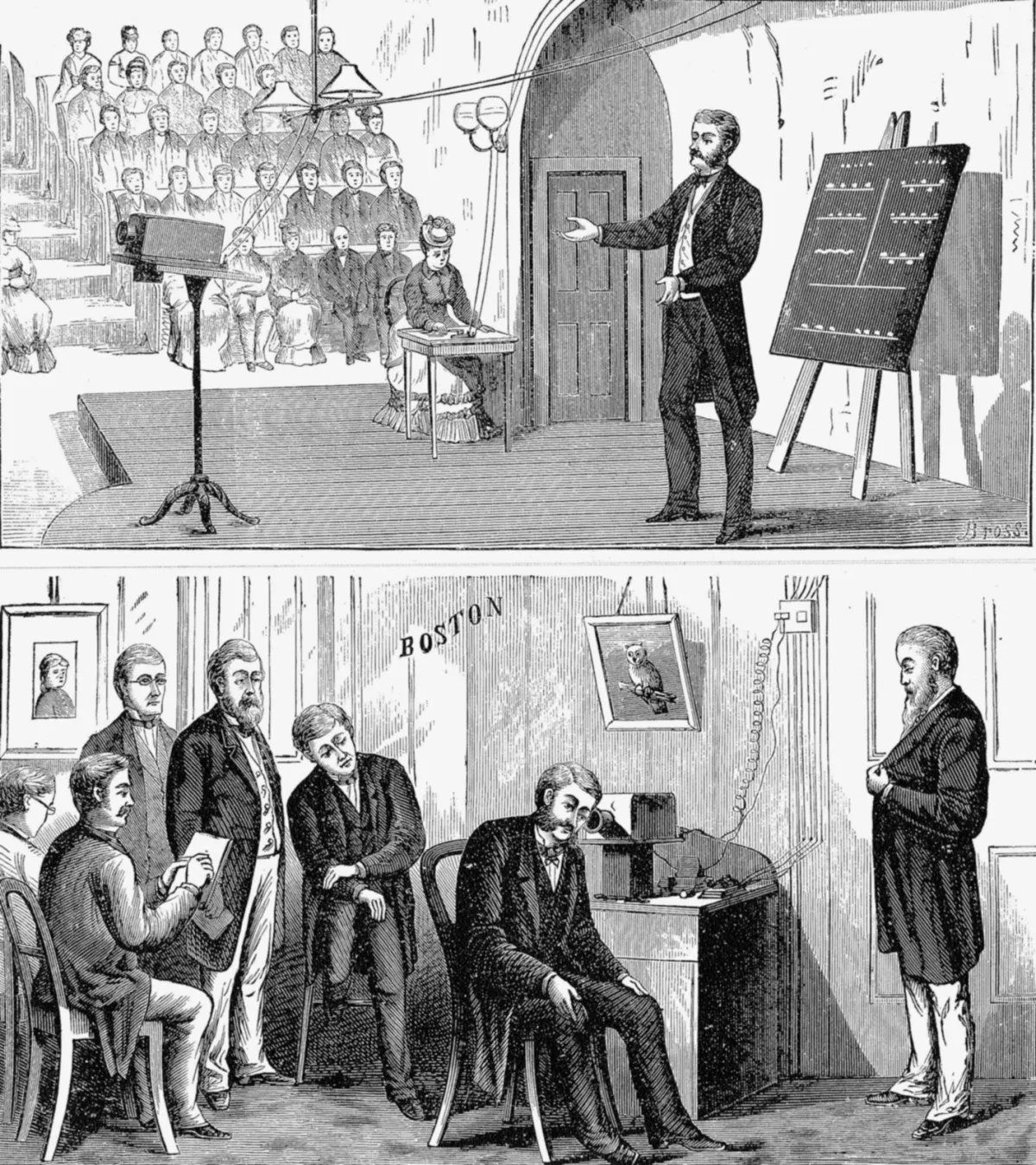 Photo: Alexander Graham Bell, via cdn.britannica.com
This near-miss was not unusual. Gray and Bell were working with nearly identical technology, drawing from the same scientific principles, and racing toward the same breakthrough. The difference between immortality and obscurity came down to a lawyer's filing schedule and the arbitrary rules of patent law. Yet our historical narrative treats Bell as a singular genius whose invention emerged from individual brilliance rather than collective scientific momentum.
The Gray-Bell race illustrates a fundamental distortion in how we understand innovation. History's habit of crowning single winners from clusters of simultaneous inventors systematically obscures the structural forces that actually drive technological progress. The result is a mythology of innovation that emphasizes individual genius over institutional conditions, timing over preparation, and narrative convenience over empirical accuracy.
The Automobile's Forgotten Fathers
Henry Ford's assembly line revolution of 1913 provides another textbook example of the innovation lottery at work. Ford is remembered as the man who "invented" mass automotive production, but he operated within an ecosystem of equally capable manufacturers who were pursuing identical strategies at nearly identical moments.
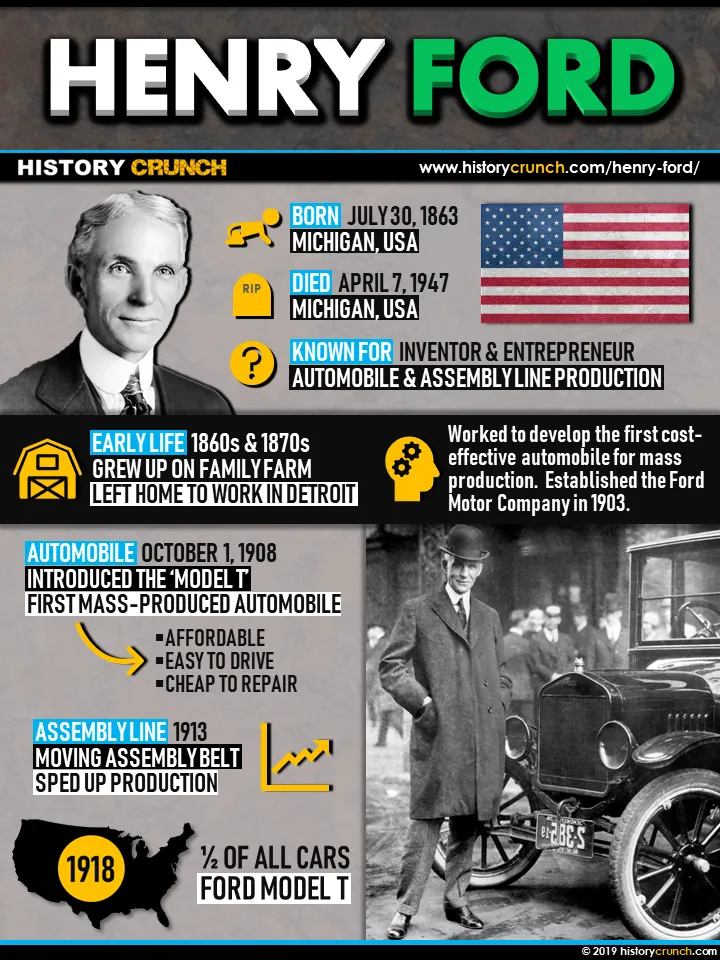 Photo: Henry Ford, via www.historycrunch.com
Ransom E. Olds had implemented assembly-line techniques for his Oldsmobile Curved Dash as early as 1901. The Duryea brothers, Frank and Charles, had been mass-producing automobiles since 1896. By 1908, there were over 200 automobile manufacturers in the United States, many of them experimenting with the same production innovations that would later be credited exclusively to Ford.
Ford's advantage was not technological superiority but timing and capital allocation. He introduced the Model T in 1908, just as American infrastructure and consumer income reached the threshold necessary to support mass automobile adoption. His competitors were working with the same engineering knowledge and manufacturing techniques, but they miscalculated the market timing or lacked access to the financial resources necessary to scale production rapidly.
The historical record reveals that Ford's famous $5-per-day wage—often cited as evidence of his enlightened labor practices—was actually a response to catastrophic employee turnover that was threatening his production schedules. Other manufacturers faced identical labor challenges but lacked the profit margins to implement similar solutions. Ford's "innovation" in labor relations was really an innovation in cash flow management.
The Railroad Barons' Parallel Universe
The railroad consolidation of the 1870s and 1880s offers perhaps the clearest example of how circumstance rather than genius determines which names survive in historical memory. Cornelius Vanderbilt is remembered as the archetypal railroad magnate, but he was operating alongside dozens of equally ambitious and capable competitors who made nearly identical strategic decisions.
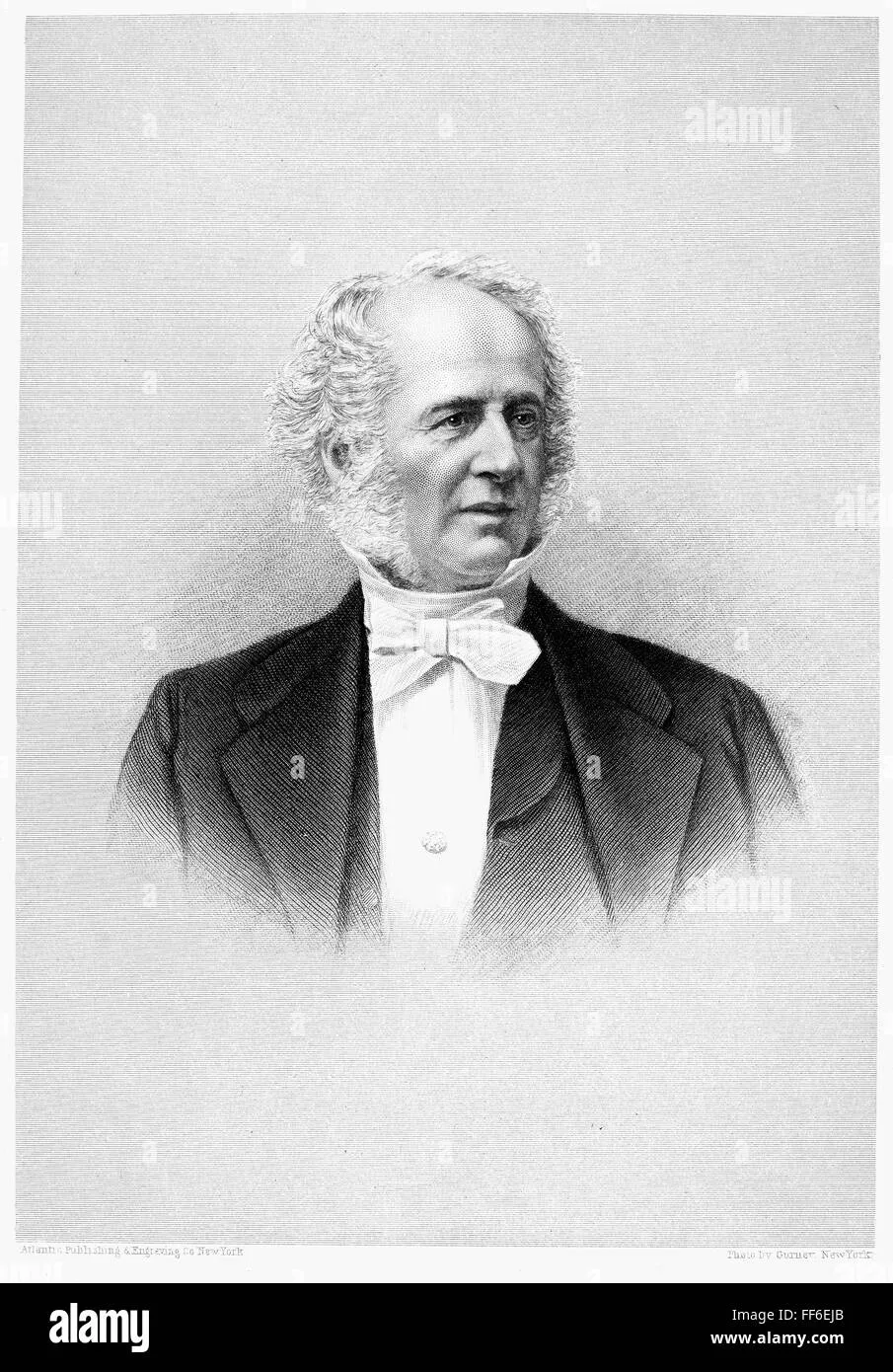 Photo: Cornelius Vanderbilt, via c8.alamy.com
Jay Gould controlled more railroad mileage than Vanderbilt at several points during the 1870s. James J. Hill built the Great Northern Railway without government subsidies, achieving better financial performance than most of his subsidized competitors. Collis Huntington's Central Pacific represented engineering achievement that arguably surpassed anything Vanderbilt accomplished.
Vanderbilt's advantage was geographic rather than managerial. His New York Central Railroad connected the two most important commercial centers in nineteenth-century America: New York City and Chicago. This route remained profitable even during economic downturns that bankrupted other railroad systems. Vanderbilt's reputation for business acumen was really a reputation for controlling the most valuable real estate in American commerce.
The forgotten railroad entrepreneurs reveal how much of what we attribute to individual brilliance actually reflects structural advantages that were largely beyond any single person's control. Geographic positioning, access to capital markets, and regulatory environments determined outcomes more than personal decision-making ability.
The Digital Age's Same Story
Contemporary technology markets demonstrate that the innovation lottery continues to operate according to identical principles. The dot-com boom of the 1990s produced dozens of companies pursuing similar strategies with comparable technology and management talent. The survivors were not necessarily the best-managed or most innovative, but those that achieved critical mass before their competitors or secured funding during favorable market windows.
Pets.com and Chewy.com represent nearly identical business models separated by timing and market conditions. Pets.com launched in 1998 during the height of dot-com speculation, when investors were funding concepts rather than proven business models. The company burned through $300 million before collapsing in 2000. Chewy.com launched in 2011, after e-commerce infrastructure had matured and consumer behavior had shifted toward online purchasing. It sold to PetSmart for $3.35 billion in 2017.
The difference between these outcomes had nothing to do with the quality of management or the soundness of the underlying business concept. Both companies were selling pet supplies online to busy urban professionals. The timing of their market entry determined whether they became cautionary tales or success stories.
The Structural Forces We Ignore
This pattern reveals a systematic bias in how American business culture understands success and failure. Our mythology of innovation emphasizes individual decision-making and personal characteristics because these narratives are more satisfying than acknowledging the role of circumstance and structural conditions.
The truth that emerges from historical analysis is less inspiring but more useful: transformational innovations emerge from technological and economic conditions that make them nearly inevitable. Multiple inventors working independently typically develop similar solutions because they are responding to the same underlying pressures and opportunities.
The winners of the innovation lottery are not necessarily more talented or harder-working than their forgotten competitors. They are the ones who achieved market timing, secured adequate financing, or controlled strategic resources at the moment when technological possibility aligned with market readiness.
The Implications for Modern Strategy
Understanding innovation as a lottery rather than a meritocracy has practical implications for contemporary business strategy. Companies that focus exclusively on technological superiority while ignoring market timing and structural advantages are repeating the mistakes of history's forgotten inventors.
The lesson from two centuries of American innovation is not that individual effort and creativity are unimportant, but that they are insufficient without favorable structural conditions. The most successful innovators are those who recognize when technological possibility and market readiness are converging, then position themselves to benefit from forces that extend far beyond any single company's control.
History's forgotten geniuses were not less brilliant than the names we remember. They were simply less fortunate in the timing of their brilliance.