A New Sign at the City Limits: The Long American Tradition of Renaming What You Cannot Fix
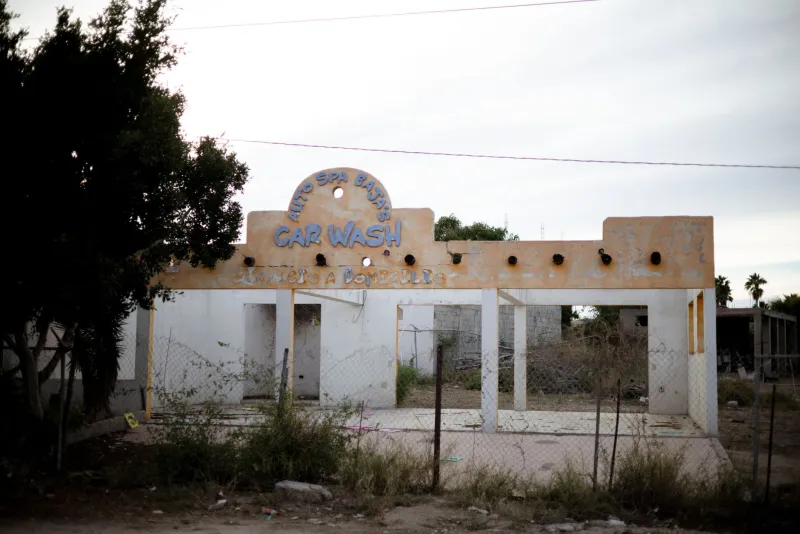
There is a particular kind of civic meeting that happens in the final years of a community's decline. The agenda is short. The room is half empty. And somewhere near the bottom of the list of items — below the discussion of the water main and above the vote on the parking ordinance — someone proposes changing the town's name.
The logic, stated aloud, sounds reasonable. The old name carries baggage. It reminds outsiders of the plant closure, the flood, the scandal, the war. A fresh name, the argument goes, is a fresh start. Nobody in that room is lying. They believe it. And that belief, repeated across dozens of American communities over the past two centuries, is itself one of the most durable and instructive patterns in the historical record.
Human psychology has not changed in five thousand years. The instinct to rename — to shed an identity that has become associated with failure — is as old as recorded civilization. What the full sweep of history makes clear, and what the abbreviated laboratory studies of modern psychology can only partially confirm, is that the instinct is almost always wrong.
The Post-War Precedent
The most concentrated wave of American civic renaming occurred in the decades following the Civil War. Across the former Confederacy, counties, towns, and townships shed names that had become liabilities. Some changes were cosmetic — slight alterations to distance a community from a notorious battle or a disgraced commander. Others were wholesale reinventions, swapping out names that had appeared in Northern newspapers in unflattering contexts.
 Photo: the Confederacy, via c8.alamy.com
Historians have documented more than forty such renamings in the South between 1865 and 1900. In nearly every case, the economic and demographic decline that prompted the renaming continued uninterrupted for years afterward. The new names did not attract new investment. They did not reverse population loss. What they did, with remarkable consistency, was provide local leadership with a narrative of forward motion at precisely the moment when forward motion had stalled.
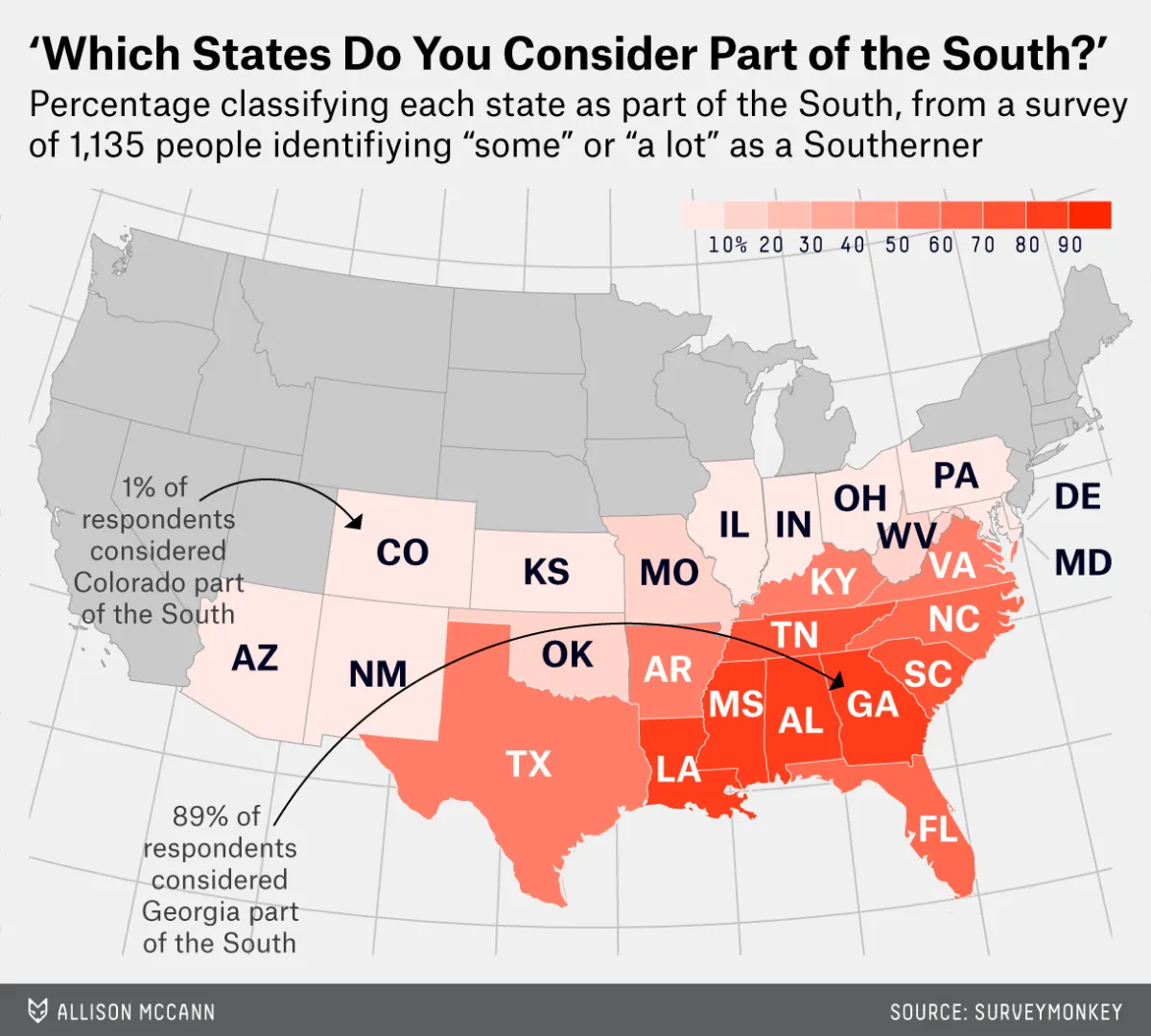 Photo: the South, via brilliantmaps.com
This is not a minor distinction. The narrative of forward motion is politically valuable. It forestalls harder conversations. It delays the reckoning. And in doing so, it often ensures that when the reckoning finally arrives, fewer options remain.
The Rust Belt Iteration
The twentieth century produced its own version of the same pattern. As manufacturing cities across the Midwest and Northeast watched their industrial bases erode through the 1970s and 1980s, a number of municipalities turned to rebranding as a component of economic revitalization strategy. Some changed their names outright. Others launched marketing campaigns so aggressive that the new identity effectively displaced the old one in public perception.
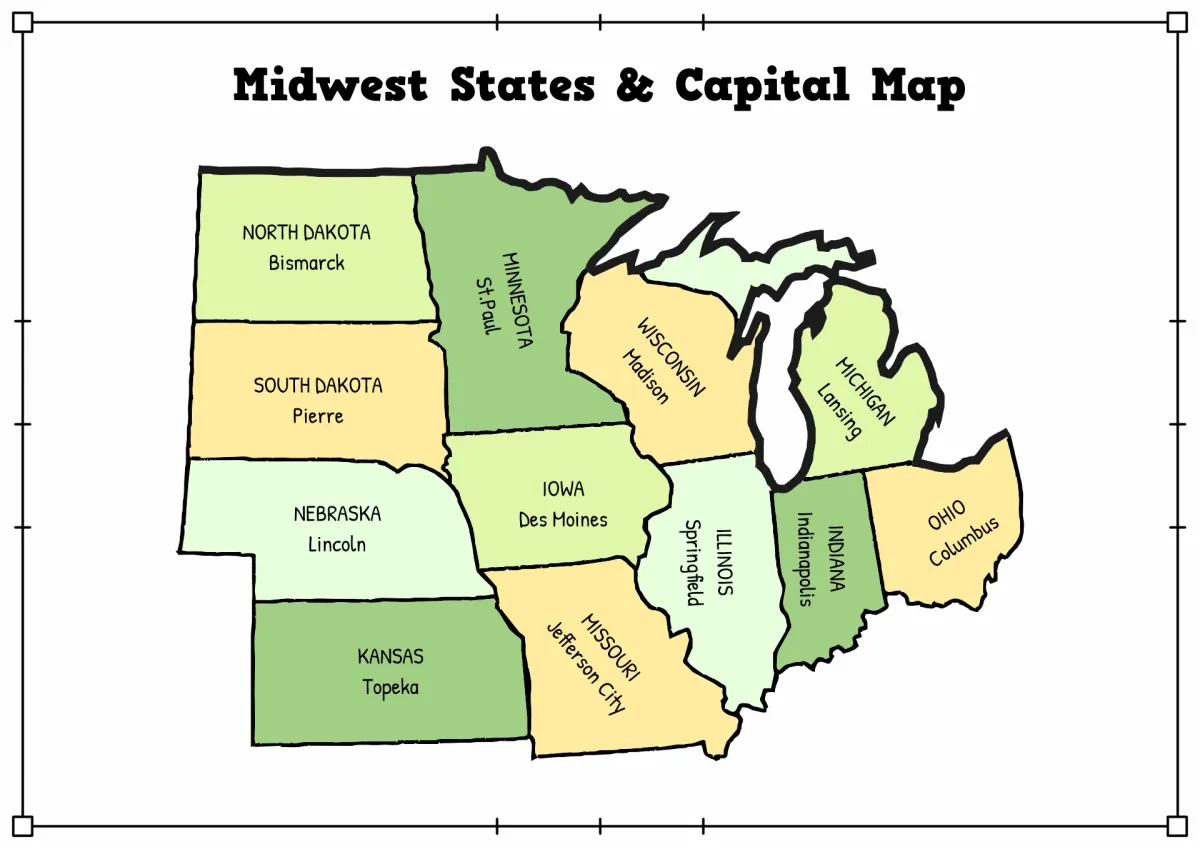 Photo: the Midwest, via www.worksheeto.com
The results were mixed at best and counterproductive at worst. Scholars studying municipal recovery in the post-industrial Midwest have noted that the communities that invested most heavily in identity reinvention — rather than in infrastructure, workforce development, or institutional reform — tended to recover more slowly than those that did neither. The renaming consumed civic energy and political capital that might otherwise have been directed toward structural change.
What the historical record shows, again and again, is that renaming is a substitution behavior. It replaces a difficult action with a symbolic one and then allows participants to feel that progress has been made.
What the Psychology Confirms
The academic literature on personal rebranding — drawn largely from studies of individuals who change their names following divorce, bankruptcy, or public disgrace — provides a useful if limited parallel. Research consistently finds that name changes undertaken as a primary response to reputational damage produce short-term psychological relief without addressing the underlying conditions. Subjects report feeling renewed. Their circumstances, measured objectively, change very little.
The limitation of this research is its scale. These are studies of individuals, conducted over months, with sample sizes that would embarrass a serious historian. The historical record, by contrast, offers hundreds of cases across centuries and continents. And the conclusion it reaches is the same: renaming is comfort, not cure.
There is a specific cognitive mechanism at work. When a community changes its name, it performs an act of collective authorship — it rewrites the first line of its own story. This feels meaningful because, in a narrow sense, it is meaningful. Names carry associations. Associations shape perception. The problem is that perception, while real, is not the primary driver of economic or civic recovery. Capital flows toward demonstrated capacity, not toward optimism expressed through municipal signage.
The Denial Architecture
What makes the renaming pattern particularly instructive for students of both history and contemporary civic affairs is what it reveals about the structure of collective denial. Communities do not rename themselves at the beginning of a crisis. They rename themselves when the crisis has become undeniable but when the will to undertake genuine structural reform has not yet materialized.
This timing is not accidental. It reflects a specific psychological moment — the point at which the gap between the community's self-image and its objective condition has grown too wide to ignore, but the political cost of honest diagnosis still feels prohibitive. Renaming threads that needle. It acknowledges that something was wrong with the old identity while stopping well short of identifying what structural failures produced the decline.
The Southern counties that renamed themselves after Reconstruction were not wrong that their old names carried associations they wished to escape. They were wrong in believing that escaping the association was equivalent to escaping the condition.
What Recovery Actually Looks Like
The historical cases in which genuinely declining communities reversed their trajectories share almost no overlap with the cases involving renaming. Recovery, when it occurred, was driven by specific and unglamorous factors: the arrival of a new industry, a change in transportation infrastructure, the emergence of local leadership willing to make decisions that were politically costly in the short term, or — most commonly — a combination of all three.
None of these factors required a new name. Several occurred in communities that had explicitly rejected symbolic gestures in favor of material ones. The towns that survived the post-industrial collapse of the late twentieth century did not, as a rule, survive because they found a better way to describe themselves.
The perennial lesson is not that names are meaningless. They are not. The lesson is that the impulse to change a name, when it arises from crisis rather than from genuine transformation, is a diagnostic signal rather than a prescription. When a community reaches for the sign at the city limits, the most useful question is not what name it should choose next. It is what conversation the new name is being used to avoid.