Four Ghosts in Every Throne Room: The Recurring Cast of Every Succession Crisis

Photo: empty executive boardroom chair head of table, via c8.alamy.com
Caesar was dead less than twenty-four hours when the maneuvering began. Within days, four distinct types of claimant had emerged from the chaos — each with a coherent argument for why power should flow in their direction, each with a fatal blind spot that history would eventually expose. The contest that followed lasted thirteen years, consumed the Republic, and produced an outcome that almost none of the original contestants had imagined.
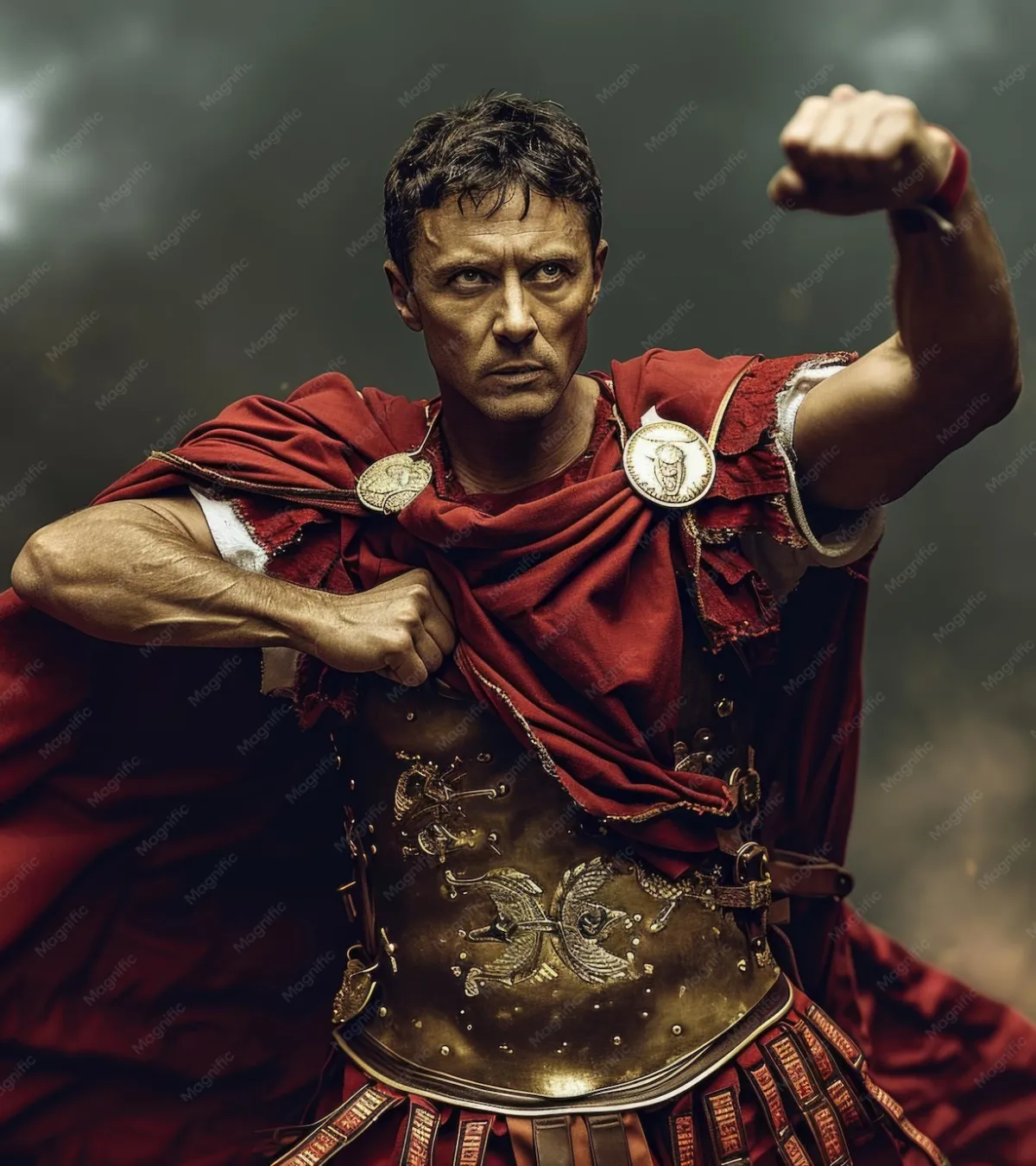 Photo: Caesar, via img.freepik.com
That was 44 BC. The boardroom version of the same drama played out in the departure of a founder-CEO from a major American technology company within the past decade. The names are different. The archetypes are identical.
Human psychology has not changed. The structures of power have been redesigned countless times — from senates to ecclesiastical councils to corporate boards — but the human responses to sudden vacancy have remained constant. What the full historical record reveals, with a clarity that no laboratory experiment on college students could replicate, is that succession crises do not produce random outcomes. They produce predictable ones, determined less by circumstance than by character type.
The First Ghost: The Loyal Deputy Who Overreaches
Mark Antony is the archetype. He was Caesar's most trusted lieutenant, present at the moment of crisis, possessed of genuine authority and genuine loyalty. He also fundamentally misunderstood what the moment required.
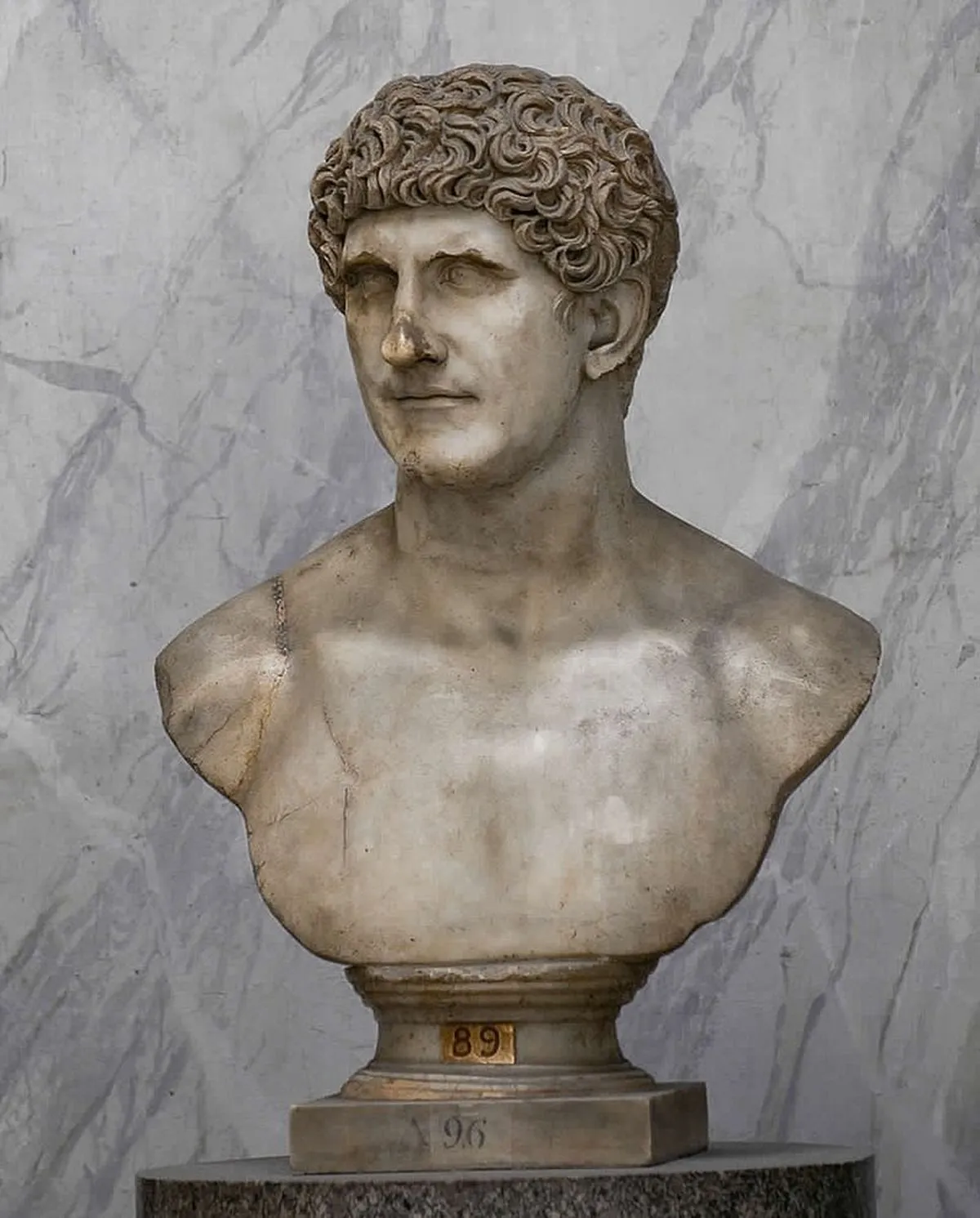 Photo: Mark Antony, via imperiumromanum.pl
The loyal deputy enters every succession crisis with significant structural advantages. He knows the organization. He commands the respect of the inner circle. He has access to information that outsiders lack. These advantages are real. They are also, paradoxically, the source of his greatest vulnerability.
Because the deputy has spent years operating within a power structure defined by someone else, his instincts are calibrated to that structure. He knows how to execute. He is less practiced at the foundational act of leadership: persuading people who owe him nothing that he is worth following. When he attempts to claim the center of the room, he does so with the confidence of a man who has always been near it — and discovers, too late, that proximity to power is not the same as the possession of it.
This pattern recurs in ecclesiastical succession crises throughout the medieval period, in the corporate succession battles of the 1980s and 1990s, and in the political transitions that followed the deaths of several twentieth-century authoritarian leaders. The deputy overreaches, alienates the coalition he needed, and opens space for someone he underestimated.
The Second Ghost: The Outside Savior Who Misreads the Room
When internal candidates are tainted by association with the old regime, institutions reach outward. The outside savior arrives with a mandate for transformation, a reputation built elsewhere, and — critically — no accurate model of the organization he has just entered.
The historical record on outside saviors is brutal. The Roman Empire's third-century crisis produced a succession of soldier-emperors drawn from the provinces, men of genuine competence who had demonstrated their abilities in contexts that bore little resemblance to the political environment of Rome itself. Most lasted less than two years. The skills that had made them successful in the field — directness, decisiveness, a tolerance for rapid change — were precisely the skills most likely to generate fatal opposition in a court culture built on patience and indirection.
The corporate equivalent is well documented. Studies of external CEO appointments following founder departures consistently find higher rates of early termination than internal appointments. The outside savior typically arrives with a diagnosis formed from incomplete information and a prescription calibrated to a different patient. By the time the misalignment becomes visible, the political damage is done.
What makes this archetype particularly durable is that the conditions that produce it — internal exhaustion, reputational damage, the need for a clean break — are genuinely real. The outside savior is not an irrational choice. He is a rational response to a real problem. The historical failure rate simply suggests that the problem he is brought in to solve is rarely the actual problem.
The Third Ghost: The Consensus Placeholder Who Refuses to Leave
No archetype is more underestimated in the moment or more consequential in retrospect. The placeholder is selected precisely because he threatens no one. He is a bridge figure, a name attached to a seat while the real contest resolves itself. Every party to the succession crisis can accept him because no party fears him.
History is crowded with placeholders who became permanent. Pope Clement V, selected in 1305 as a compromise candidate acceptable to the French crown, moved the papacy to Avignon and initiated a seventy-year exile from Rome that reshaped the Church's political geography for centuries. Numerous corporate boards have appointed interim CEOs who, having demonstrated unexpected competence or simply having outlasted their rivals, converted temporary authority into permanent tenure.
The psychological mechanism is straightforward. The placeholder, having been underestimated, faces lower expectations. He is permitted to move cautiously and build coalitions without triggering the defensive responses that more threatening candidates provoke. By the time the factions that installed him recognize what has happened, he has become too embedded to remove without cost.
The Fourth Ghost: The Dark Horse
Octavian was nineteen years old and largely unknown when Caesar died. The established players — Antony, Cicero, Brutus — either dismissed him or attempted to use him. He allowed them to do both, for as long as it served his purposes.
The dark horse is the most dangerous figure in any succession crisis because he is the least visible during the period when positions are being formed and alliances are being constructed. He enters the contest without the liabilities of the deputy, the misaligned expectations of the outside savior, or the structural fragility of the placeholder. He has, in many cases, been excluded from the initial calculations entirely — which means that the moves made by the other three have not been made with him in mind.
The corporate and political versions of this archetype appear with remarkable regularity. The candidate who was not on the short list. The executive who had been quietly building a network while the more prominent contenders were consuming each other. The politician who entered the primary race late and won it.
What the historical record suggests is that the dark horse succeeds not despite his obscurity but because of it. The vacuum created by a sudden departure in power generates enormous friction among the visible candidates. The dark horse is the path of least resistance — until he is the only path remaining.
Reading the Room Before the Room Empties
The practical value of this framework is not academic. Succession crises are among the most consequential events in the life of any institution — corporate, political, or civic. The historical record suggests that outcomes are substantially determined within the first weeks of a vacancy, before most stakeholders have fully processed the change.
Identifying which of the four archetypes has entered the room — and which combination of them is present — provides a forecasting tool of considerable reliability. The deputy and the outside savior tend to eliminate each other. The placeholder tends to survive both. The dark horse tends to win.
This is not destiny. Individual circumstances modify the pattern. But the pattern, repeated across five centuries and every form of organized human institution, is too consistent to dismiss. The throne room changes. The ghosts do not.