Every Utopia Ends the Same Way: The Clockwork Collapse of Communities That Tried to Secede from History
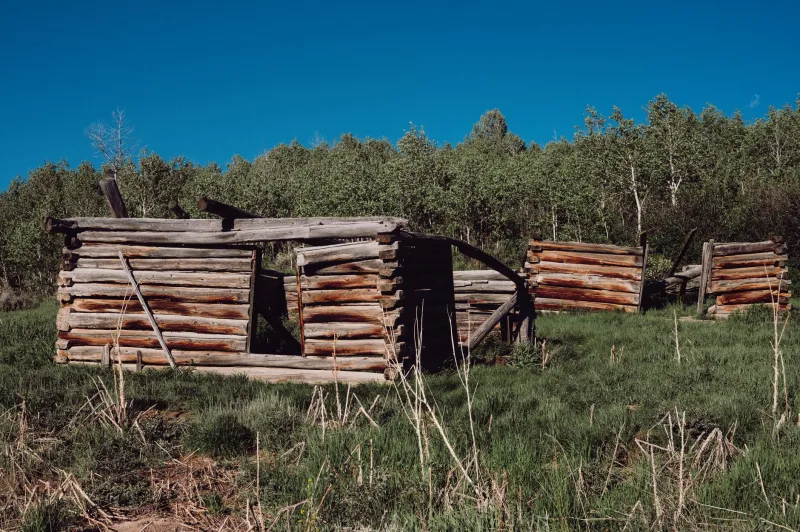
America has always been unusually hospitable to the idea that a sufficiently motivated group of people can simply walk away from history and start over. The Puritans believed it. The Shakers believed it. The residents of Brook Farm believed it. The followers of John Humphrey Noyes at Oneida believed it. So did the members of roughly four hundred documented communal experiments that flourished between 1820 and 1920, and so did the survivalist enclaves, intentional communities, and sovereign-citizen settlements that followed them across the twentieth century.
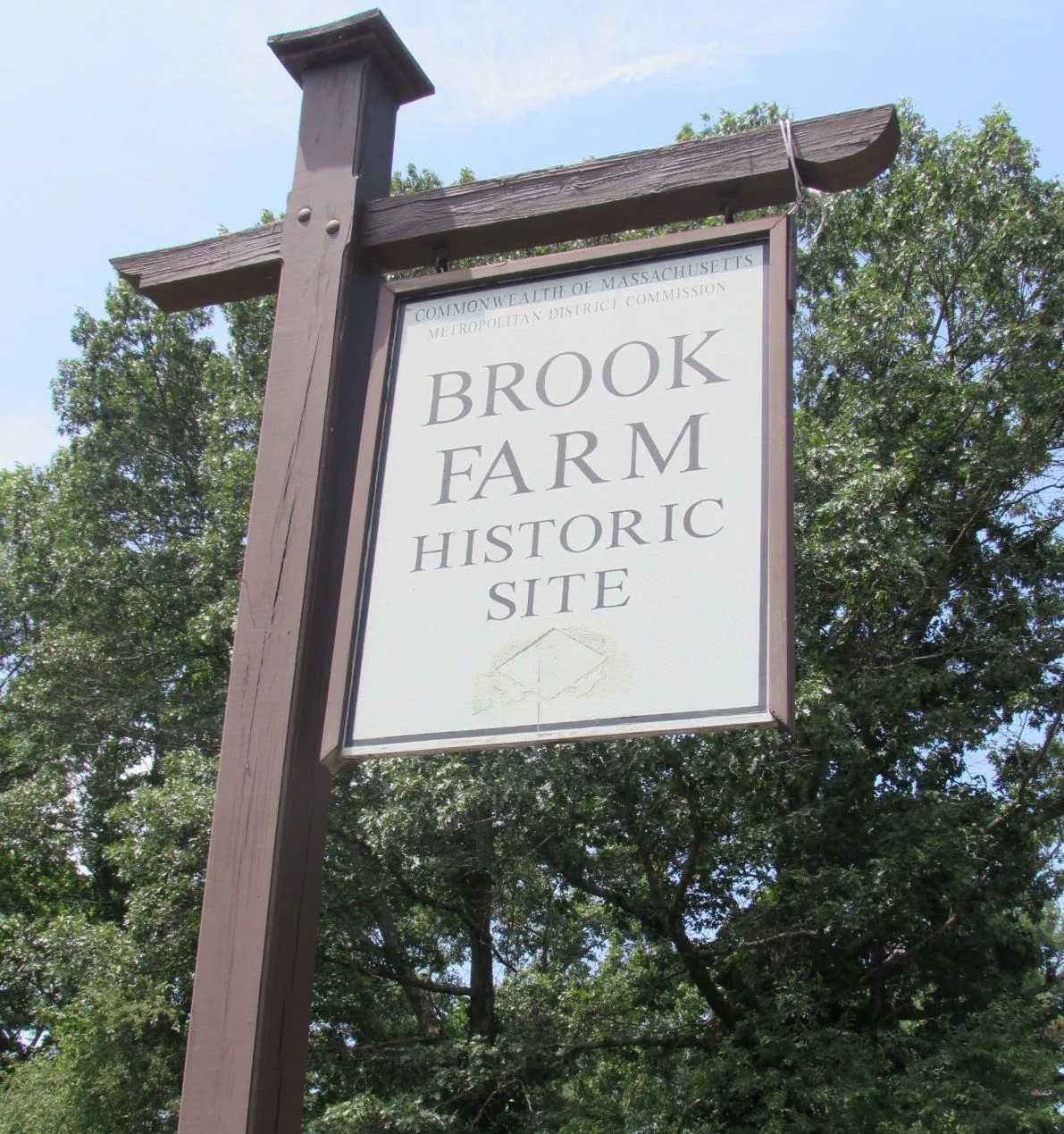 Photo: Brook Farm, via img.atlasobscura.com
They were all wrong. And they were wrong in precisely the same way, in precisely the same order, every single time.
This is not a condemnation. It is a forensic observation. When a phenomenon repeats itself with sufficient regularity across two hundred years of documented history, it stops being a series of individual failures and becomes something closer to a law.
The Founding Moment
Every recorded example begins with what might be called the founding rupture — a break, real or symbolic, with the corrupt outside world. The founders of Brook Farm in 1841 were recoiling from industrializing Boston. The Amana Colonies that settled Iowa in 1855 were fleeing religious persecution in Germany. The survivalist compounds that multiplied across the American interior in the 1970s and 1980s were retreating from what their founders perceived as a terminally compromised federal government.
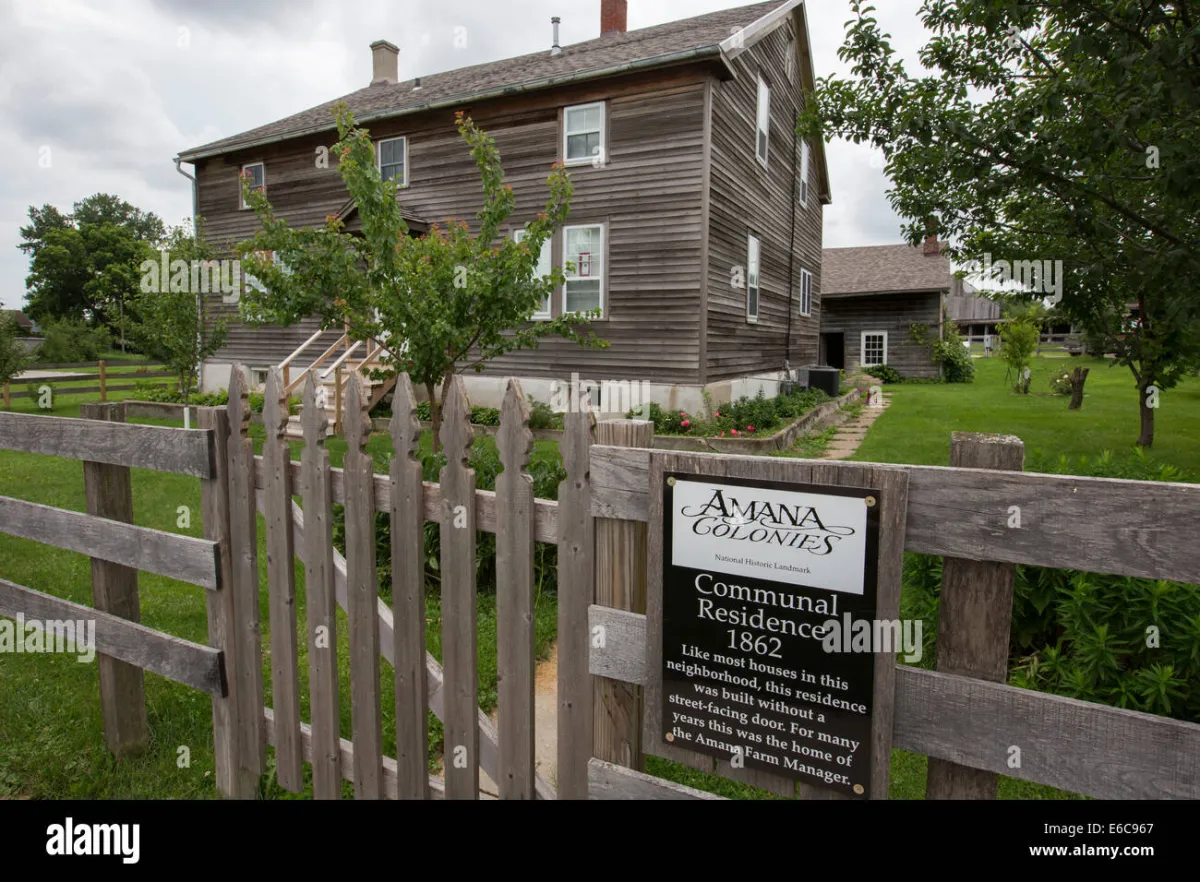 Photo: Amana Colonies, via c8.alamy.com
The specifics differ. The psychological architecture does not. In every case, the founding moment is defined by a charismatic individual — almost always male, almost always possessed of unusual rhetorical gifts — who articulates a diagnosis of the outside world so persuasive that it justifies the radical act of abandonment. The diagnosis is the product. The community is, in a real sense, secondary.
This matters enormously, because it means the founding document — the charter, the covenant, the manifesto — is written not as a practical governance instrument but as a declaration of difference. It defines the community against the outside world rather than for itself. And that negative definition carries consequences that only become visible later.
The Honeymoon Phase and Its Structural Limits
The early period of almost every recorded communal experiment shares a remarkable texture. Participants in Brook Farm described the first years with language indistinguishable from that used by members of the Oneida Community, or the Shakers, or the Llano del Rio colony in California's Antelope Valley in 1914. The work is meaningful. The relationships feel authentic. The sense of collective purpose produces what modern psychologists would recognize as a genuine wellbeing premium.
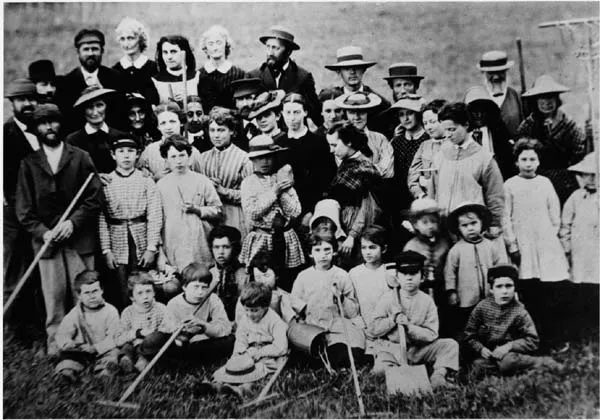 Photo: Oneida Community, via d3h6k4kfl8m9p0.cloudfront.net
Historians have sometimes dismissed this phase as naive. That reading misses the point. The honeymoon is real. The problem is that it is powered by the energy of the founding rupture, and that energy is finite. Once the outside world stops being a daily psychological reference point — once the escape feels complete — the community must generate its own internal meaning. And that is where the machinery begins to strain.
Without an external enemy to define itself against, every such community has historically turned inward. The founding document, written as a declaration of difference rather than a governance instrument, proves inadequate for resolving the mundane conflicts that accumulate in any close-quarters human settlement: labor disputes, romantic entanglements, questions of resource allocation, disagreements about the interpretation of founding principles.
The Fracture
The fracture arrives with a consistency that borders on the mechanical. In virtually every documented case, it takes the form of a dispute about fidelity to founding principles — specifically, a dispute between those who believe the community has drifted from its original vision and those who believe adaptation is necessary for survival.
At Brook Farm, the fracture came when founder George Ripley embraced the rigid labor structures of Fourierism in 1844, alienating the community's more literary members. At Oneida, it came when Noyes's system of complex marriage produced succession conflicts that no founding document had anticipated. At the Llano del Rio colony, it came when the founder unilaterally relocated the entire enterprise to Louisiana without consulting the membership.
The specific trigger varies. The underlying structure does not. The charismatic founder, whose personal authority held the community together during the honeymoon phase, becomes the community's single point of failure. Either the founder's authority is challenged and the community splinters, or the founder's authority is not challenged and the community calcifies around a single personality until that personality's death or departure removes the only load-bearing element in the structure.
This is not a character flaw unique to utopian founders. It is the predictable consequence of building a governance structure around a founding rupture rather than a functioning institution.
What the Uniform Failure Reveals
The most instructive aspect of this two-hundred-year record is not the failure itself but the participants' consistent inability to recognize the pattern they were repeating. Every communal experiment in American history has been founded by people who believed their attempt was categorically different from prior attempts — better designed, more spiritually grounded, more practically rigorous.
That belief was never accurate. And the fact that it was never accurate, across hundreds of attempts by thousands of intelligent and motivated people, suggests something important: the psychological needs that drive the founding of such communities are the same needs that make them ungovernable. The desire to escape collective human psychology is itself a product of collective human psychology. You cannot opt out of the operating system using tools written in the operating system's own language.
The survivalist communities of the late twentieth century — many of which documented their own dissolution with unusual candor — add a final data point. Even groups explicitly aware of prior communal failures, groups that had studied the historical record and believed they had designed around its lessons, reproduced the founding rupture, the honeymoon, the fracture, and the collapse on virtually the same timeline as their nineteenth-century predecessors.
History is not merely the largest study ever conducted. In this case, it is also the most ignored.