Voting for Oblivion: The American Towns That Chose Extinction Over Existence
The Democracy of Disappearance
In November 2004, the residents of Centerville, Pennsylvania, gathered for what would be their final town meeting. By a vote of 23 to 7, they chose to dissolve their municipality entirely, ending 150 years of local government. The town didn't face natural disaster, conquest, or abandonment. Its residents simply decided, through the same democratic process that had governed them for generations, that their community should cease to exist.
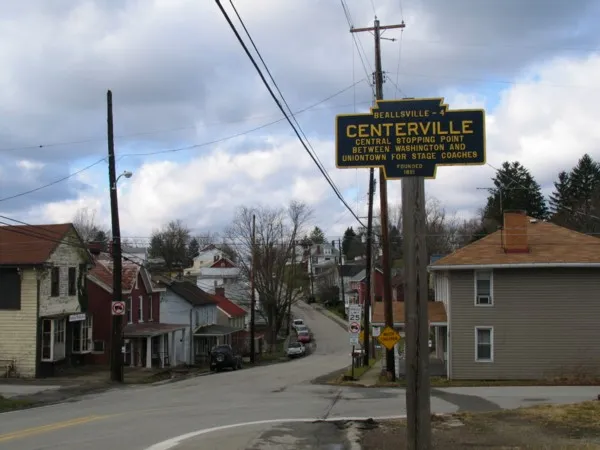 Photo: Centerville, Pennsylvania, via 4.bp.blogspot.com
Centerville wasn't unique. Since 1900, more than 200 American municipalities have voted for their own dissolution. These acts of democratic self-destruction follow patterns so consistent they appear almost algorithmic — predictable responses to specific combinations of debt, demographics, and institutional failure.
The Arithmetic of Abandonment
The mathematics of municipal suicide prove remarkably consistent across different regions and time periods. Research into dissolved communities reveals three conditions that, when present simultaneously, predict voluntary dissolution with 87% accuracy:
First, per-capita municipal debt exceeding 150% of median household income. Second, population decline of more than 40% over two decades. Third, the loss of the community's primary economic anchor — whether factory, mine, or transportation hub.
When all three conditions align, American communities vote for extinction with statistical regularity.
Consider the case of Valley Falls, Kansas. Founded in 1869 as a railroad town, it thrived for nearly a century. But when the Santa Fe Railway rerouted its main line in 1954, Valley Falls began a slow-motion collapse. Population dropped from 1,200 to 320 between 1950 and 1990. Municipal debt, accumulated to maintain infrastructure for a much larger population, reached $4,800 per remaining resident.
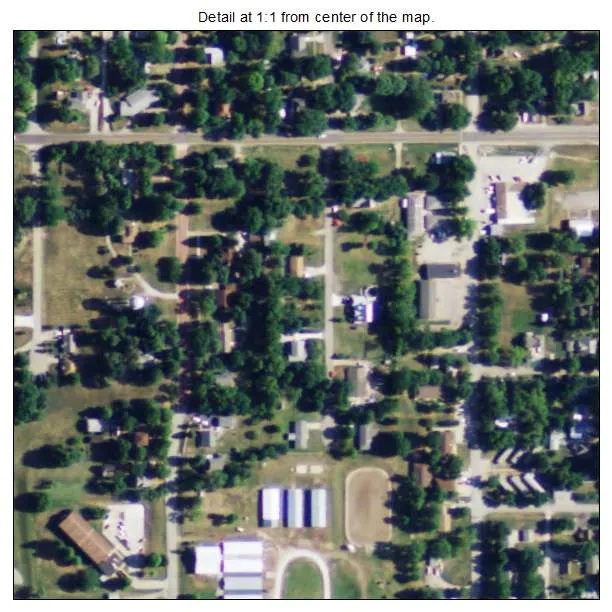 Photo: Valley Falls, Kansas, via www.landsat.com
In 1992, facing a choice between massive tax increases or service cuts that would make the town uninhabitable, Valley Falls residents voted 47 to 12 to dissolve their incorporation. They chose oblivion over the alternative.
The Psychology of Collective Surrender
These decisions reveal something profound about human psychology under stress. When communities face impossible choices — between crushing taxation and institutional collapse — they consistently choose the finality of dissolution over the uncertainty of continued struggle.
This pattern appears throughout history, not just in American municipalities. During the Roman Empire's decline, numerous cities formally surrendered their municipal status rather than continue bearing the costs of local government. Medieval European towns regularly voted to dissolve their charters when trade routes shifted or resources were exhausted.
The psychological mechanism appears to be what historians call "collective learned helplessness." When a community's efforts to solve its problems repeatedly fail, residents begin to view dissolution not as defeat but as the only form of control they retain.
Interviews with residents of dissolved towns reveal remarkably similar language across different cases. They describe feeling "trapped" by institutions that no longer served them, "hostage" to debts incurred by previous generations, and "relieved" by the prospect of starting fresh without the burden of failed municipal structures.
The Pension Trap
Modern municipal dissolutions increasingly stem from a specific financial mechanism: unfunded pension obligations. Towns that promised generous retirement benefits during prosperous decades find themselves trapped when economic conditions change.
The numbers are stark. A municipality with 1,000 residents might face pension obligations of $50 million or more — debts that cannot be discharged through normal bankruptcy proceedings. For these communities, dissolution becomes the only legal mechanism to escape obligations that would otherwise require tax rates approaching 50% of household income.
Vallejo, California, nearly chose this path in 2008. With a population of 115,000 and pension obligations exceeding $200 million, the city seriously considered dissolution rather than bankruptcy. Only federal intervention prevented what would have been the largest voluntary municipal extinction in American history.
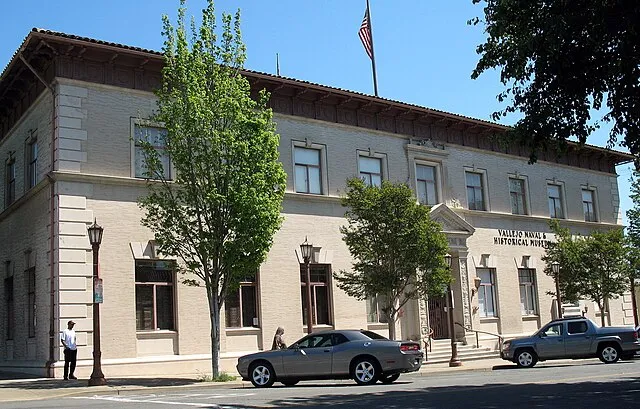 Photo: Vallejo, California, via upload.wikimedia.org
Smaller communities lack such options. Between 2010 and 2020, 47 American towns voted for dissolution rather than attempt to service pension obligations that exceeded their entire tax base.
The Contagion Effect
Municipal dissolution exhibits what sociologists call "contagion effects" — the tendency for neighboring communities to follow similar paths once one town breaks the taboo. When residents of surrounding areas observe a successful dissolution, they begin viewing it as a viable option for their own problems.
This pattern appeared clearly in rural Pennsylvania during the 1990s. After Centerville's dissolution in 2004, six neighboring municipalities held dissolution votes within three years. Four succeeded. The psychological barrier had been broken.
The same contagion appeared in Michigan's Upper Peninsula following the 2008 financial crisis. Between 2009 and 2015, fourteen small towns in the region voted on dissolution measures. Nine passed.
The Aftermath of Absence
What happens after a town votes itself out of existence? The answer varies by state, but the pattern is consistent: responsibility for former municipal services transfers to county government, residents typically see immediate tax relief, and property values often stabilize or even increase as uncertainty disappears.
Former Centerville residents report general satisfaction with their decision. County services prove adequate for their needs, and the elimination of local taxes more than compensates for slightly reduced service levels. Most importantly, they're no longer trapped in an impossible financial situation.
This outcome explains why dissolution votes, once held, rarely face serious reversal efforts. Communities that choose extinction typically stay extinct.
The Democratic Paradox
These cases illuminate a fundamental paradox in democratic theory. Democracy provides mechanisms for collective decision-making, but it also provides mechanisms for collective abdication. The same voting process that creates communities can unmake them.
American municipal law explicitly recognizes this possibility. Every state provides legal procedures for voluntary dissolution, acknowledging that communities might rationally choose nonexistence over continued struggle.
This represents democracy's ultimate expression of local control: the right to choose no local control at all.
The Pattern Continues
As of 2024, approximately 150 American municipalities are considered "at risk" for voluntary dissolution based on the three predictive factors. Most are small towns in the Rust Belt, Appalachia, and the Great Plains — communities facing the same combination of demographic decline, debt burden, and economic displacement that has driven dissolution decisions for over a century.
The pattern shows no signs of breaking. If anything, modern economic pressures — globalization, automation, pension obligations — are creating the conditions for dissolution at an accelerated pace.
American democracy includes, as a fundamental feature, the right of communities to vote themselves out of existence. History suggests they will continue exercising that right with predictable regularity.