Against All Odds: The Stubborn Mathematics of Municipal Survival

The Obituary That Never Came
In 1982, Time magazine declared Youngstown, Ohio "a symbol of the decay of industrial America." The city had lost 100,000 residents since 1960. General Motors had closed its massive assembly plant. The steel mills that had powered the local economy for over a century were shuttering one by one. Urban planners and economists agreed that Youngstown represented the inevitable fate of Rust Belt cities: slow-motion collapse followed by managed decline.
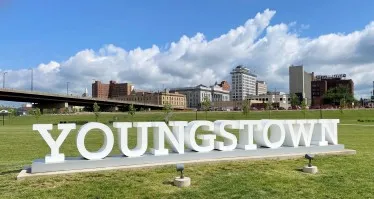 Photo: Youngstown, Ohio, via youngstownohio.gov
Forty years later, Youngstown remains stubbornly alive. The population has stabilized around 65,000. The downtown has attracted technology companies and artists. The city has transformed abandoned industrial sites into urban farms and recreational spaces. While Youngstown never recovered its mid-twentieth-century prosperity, it avoided the complete collapse that experts had predicted with mathematical certainty.
Youngstown's survival illustrates a pattern that has repeated across two centuries of American economic transformation. Every generation of journalists and academics produces authoritative analyses explaining why specific communities cannot possibly survive their obvious economic obituaries. A small but persistent subset of these doomed cities then proceeds to adapt in ways that confound the predictions, revealing variables that the experts consistently overlook.
The Variables That Matter
Historical analysis of municipal survival reveals that the same factors have determined outcomes for over 200 years, yet they remain largely invisible to contemporary observers. The most important variable is not the size of the economic shock or the quality of local leadership, but the degree to which a community's social infrastructure can function independently of its primary economic driver.
Pittsburgh's transformation from steel city to technology hub illustrates this principle. When the steel industry collapsed in the 1980s, Pittsburgh possessed three crucial assets that most industrial cities lacked: a major research university, a diversified network of smaller manufacturers, and a professional class that had developed skills transferable to emerging industries.
The University of Pittsburgh and Carnegie Mellon University had been training engineers and researchers for decades. These institutions continued operating regardless of what happened to the steel mills. Local manufacturers that had supplied the steel industry possessed machining and materials expertise that proved valuable to emerging technology companies. The professional class that had managed steel production could adapt those skills to managing software development and biotechnology research.
Contrast Pittsburgh's assets with those of Gary, Indiana, which had organized its entire social and economic structure around a single employer: U.S. Steel. When the company downsized its Gary operations in the 1970s and 1980s, the city lost not only jobs but the institutional foundation that had supported education, healthcare, and civic organizations. Gary lacked the independent social infrastructure necessary to function without its primary economic driver.
The Railroad Towns That Lived
The railroad boom and bust of the nineteenth century provides the clearest historical parallel to contemporary debates about post-industrial economic transition. Between 1860 and 1890, railroad companies established hundreds of towns across the American West, many of them designed around single functions: maintenance yards, water stops, or regional shipping centers.
When railroad technology changed in the early twentieth century—steam engines gave way to diesel, maintenance requirements decreased, and shipping patterns consolidated—most of these towns should have disappeared according to economic logic. Many did. But a significant minority adapted by developing economic functions that had nothing to do with railroads.
Cheyenne, Wyoming, exemplifies successful railroad town adaptation. Founded in 1867 as a Union Pacific maintenance facility, Cheyenne should have withered when the railroad reduced its local operations in the 1920s. Instead, the city leveraged its transportation infrastructure to become a regional agricultural processing center. The railroad yards that had serviced steam engines were converted to livestock shipping facilities. The skilled workforce that had maintained locomotives transitioned to maintaining agricultural equipment.
 Photo: Cheyenne, Wyoming, via i.pinimg.com
Cheyenne's survival depended on assets that had developed as byproducts of its original railroad function: transportation infrastructure, mechanical expertise, and regional commercial relationships. These assets proved transferable to new economic activities even after the original railroad jobs disappeared.
The Mill Towns' Secret
New England's textile mill towns of the nineteenth and early twentieth centuries faced similar adaptation challenges when manufacturing moved south in search of lower labor costs. Most mill towns followed the predicted pattern of decline, but a crucial minority discovered economic functions that utilized their existing assets in unexpected ways.
Lowell, Massachusetts, represents the most successful mill town adaptation. When textile manufacturing left Lowell in the 1950s, the city possessed several transferable assets: a skilled industrial workforce, extensive manufacturing infrastructure, and proximity to Boston's financial and educational resources. Rather than attempting to attract new textile manufacturers, Lowell repositioned itself as a technology manufacturing center.
The mill buildings that had housed textile looms were converted to electronics assembly facilities. The workforce that had operated complex textile machinery proved capable of operating equally complex electronic manufacturing equipment. The transportation infrastructure that had moved cotton and finished textiles could move electronic components and finished computers.
Lowell's transformation was not the result of visionary planning or exceptional leadership. It succeeded because local entrepreneurs recognized that the city's industrial assets were transferable to emerging technologies. The adaptation occurred through hundreds of small decisions by individual business owners rather than comprehensive economic development strategies.
The Mining Towns That Wouldn't Die
Western mining towns provide perhaps the most dramatic examples of predicted municipal death followed by unexpected survival. When mineral deposits were exhausted or became unprofitable to extract, entire communities were expected to disappear. The historical record shows that geography and timing determined which mining towns survived the transition to post-extractive economies.
Aspen, Colorado, transformed from a played-out silver mining town into a resort destination because it possessed two crucial assets: spectacular natural scenery and transportation infrastructure that could be repurposed for recreational rather than industrial use. The narrow-gauge railroad that had carried silver ore down the mountain could carry tourists up the mountain. The mining camps that had housed seasonal workers could be converted to seasonal vacation accommodations.
Aspen's transformation occurred during the 1940s and 1950s, when rising American prosperity was creating demand for recreational destinations that had not existed during the town's original mining boom. The timing was as important as the geography: Aspen adapted to post-mining economics precisely when broader economic conditions were creating markets for its alternative assets.
The Pattern That Persists
Analysis of municipal survival across different eras and industries reveals a consistent pattern. Communities that successfully navigate economic transitions possess three characteristics: diversified social infrastructure that can function independently of the primary industry, transferable assets that prove valuable to emerging economic activities, and timing that aligns local adaptation with broader economic trends.
These variables remain largely invisible to contemporary observers because they develop gradually over decades and become apparent only in retrospect. Journalists and economists focus on obvious factors—job losses, population decline, industrial closures—while overlooking the less visible social and institutional assets that determine long-term survival.
The lesson from two centuries of American municipal evolution is not that all communities can survive economic transitions, but that the variables determining survival have remained remarkably consistent. Communities that understand these historical patterns can position themselves to benefit from forces that extend beyond any single industry or economic cycle.
The experts keep getting the prognosis wrong for the same reason every time: they analyze communities as economic units rather than social ecosystems. The mathematics of municipal survival operate according to principles that transcend any particular industry or economic era.