The Pedestal Was Always a Trap: How Every Civilization Manufactures and Destroys Its Public Thinkers
Photo: Vyacheslav Argenberg, CC BY 4.0, via Wikimedia Commons
The lifecycle of a contemporary public intellectual follows a pattern so reliable that it has become a genre of its own. An academic or specialist produces work of genuine rigor. A larger audience discovers it. The specialist is invited to speak beyond their area of expertise. They accept. The simplifications required by a general audience invite criticism from specialists. The prominence required by celebrity invites attack from political opponents. Within a decade, the person who was celebrated as a voice of clarity is being described as overextended, compromised, or fraudulent — often by people who were among their earliest enthusiasts.
This is treated, almost universally, as a symptom of something new: the attention economy, the outrage cycle, the collapse of institutional authority. The historical record suggests otherwise. The arc is not modern. It is ancient, and it operates through mechanisms that have nothing to do with algorithms and everything to do with the permanent psychology of crowds and expertise.
History is the largest study ever conducted on human behavior, and it has been running this particular experiment continuously for at least two millennia. The results are consistent.
The Roman Precedent
Cicero is the most thoroughly documented case in antiquity, but he is representative of a broader pattern in Roman intellectual life. He rose as a lawyer and orator — a technical specialist in the forensic arts — and parlayed that expertise into a public prominence that extended well beyond the courtroom. His philosophical writings, his political speeches, his voluminous correspondence: all of it was consumed by an audience that wanted access to a mind that could make complex things legible.
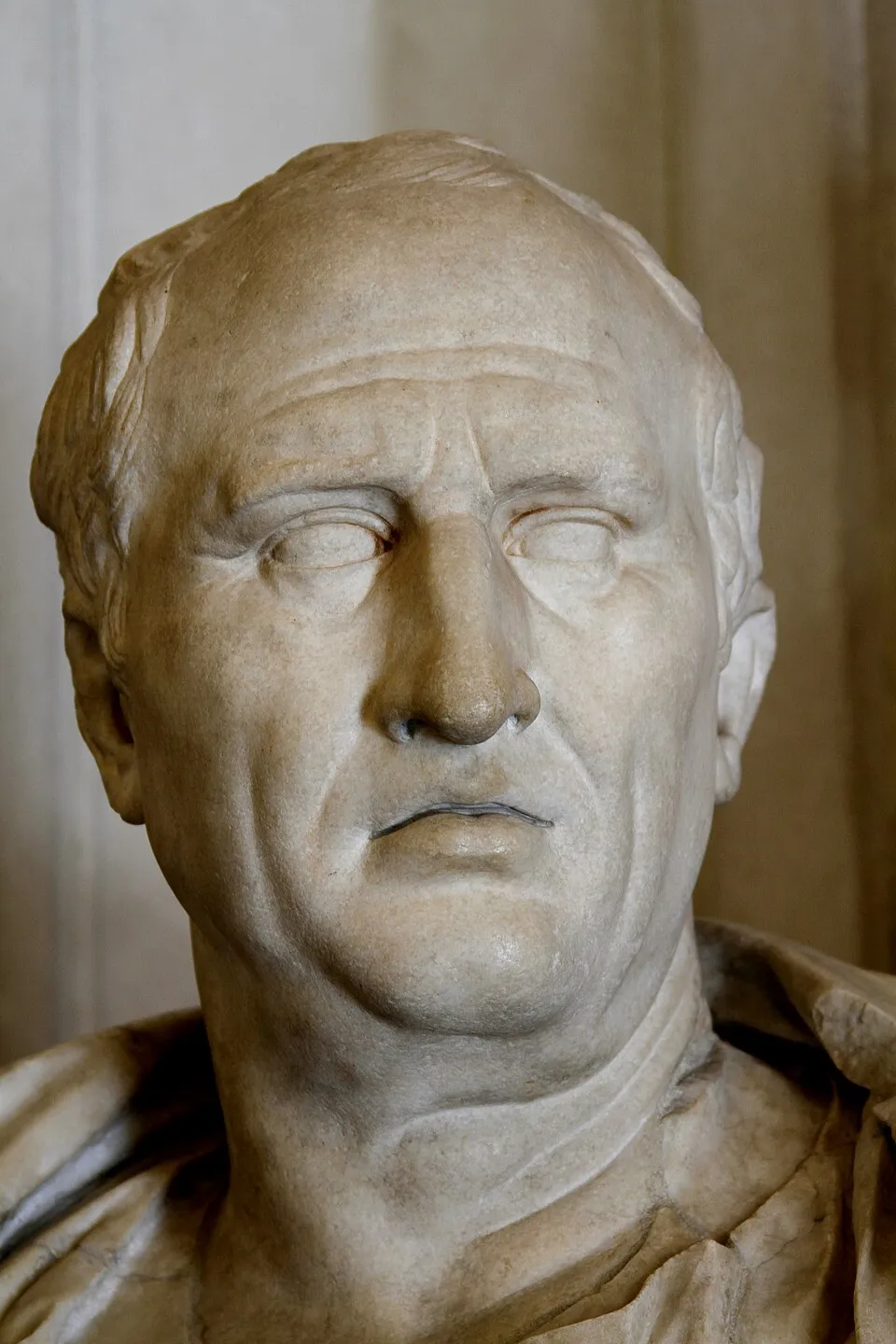 Photo: Cicero, via upload.wikimedia.org
The same prominence made him a target. His enemies attacked not merely his politics but his intellectual credibility — the argument being that a man who spoke on everything could be trusted on nothing. His execution in 43 BC was political, but the cultural groundwork for his destruction had been laid by the very celebrity that made him powerful. He had been elevated precisely to the height from which he could be most effectively knocked down.
Less famous but equally instructive is the case of Pliny the Elder, whose encyclopedic ambition — attempting to synthesize all of Roman natural knowledge in a single work — was celebrated in his lifetime and subjected to withering criticism within a generation of his death. The charge was not that he had been wrong on specific points, though he had been. The charge was that the scope of his project was itself a form of intellectual presumption. He had claimed too much territory. The attack on overreach is, notably, only possible after the reach has been extended — after the audience has demanded exactly the breadth it then punishes.
Florence and the Humanist Trap
The Florentine humanists of the fifteenth century operated within a patronage system that made the celebrity intellectual's dilemma unusually transparent. Figures like Pico della Mirandola and Angelo Poliziano were celebrated by the Medici circle as ornaments of a new age of learning — men whose ability to synthesize classical learning with contemporary concerns made them valuable both intellectually and as symbols of Florentine cultural ambition.
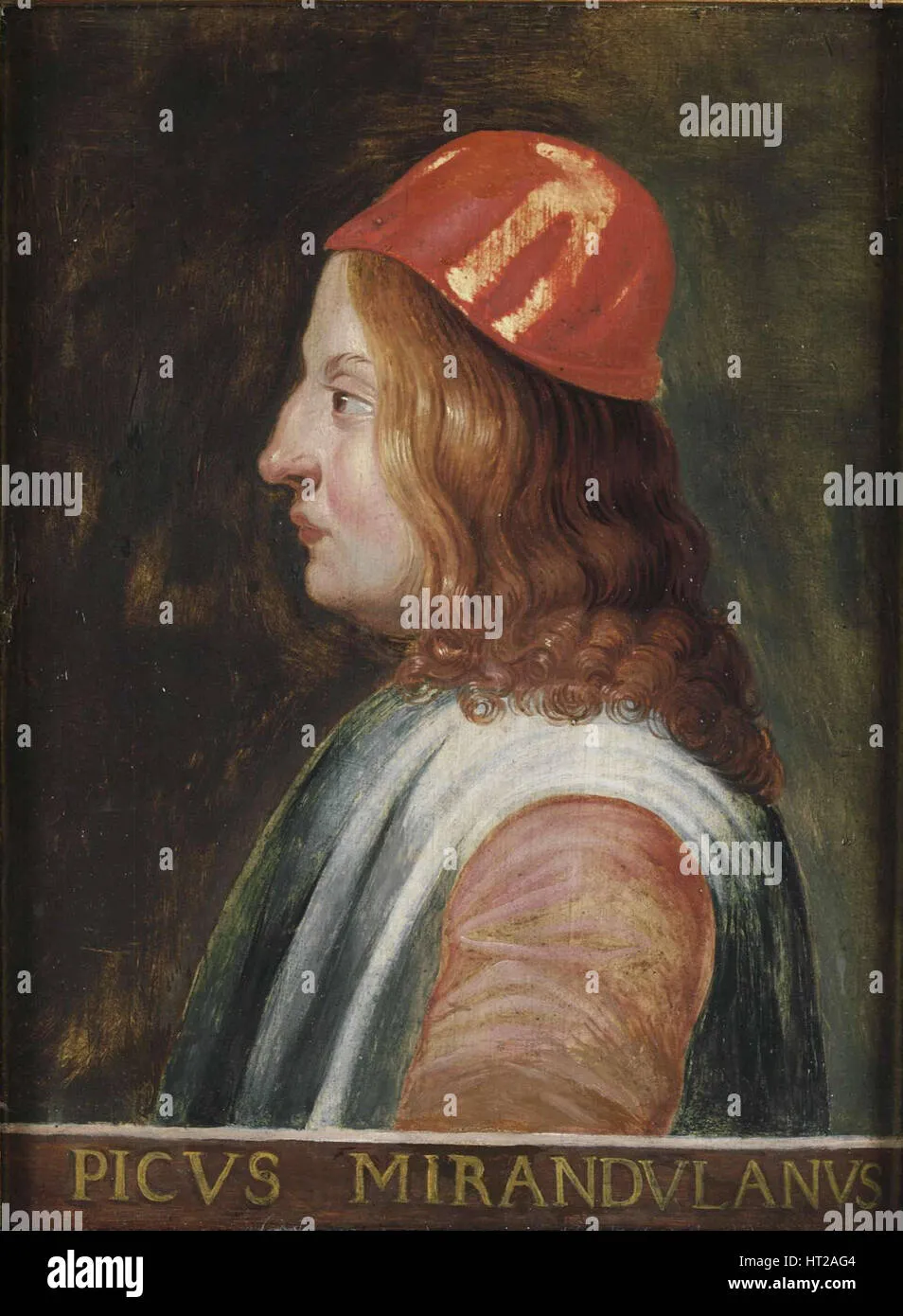 Photo: Pico della Mirandola, via c8.alamy.com
The trap was structural. Patronage required performance. Performance required audiences. Audiences required accessibility. The same humanists who produced rigorous philological scholarship were also expected to deliver public orations, compose occasional verse, and hold forth on theological questions at dinner tables. The inevitable result was that their scholarly credibility was undermined by their public roles, and their public roles were undermined by the suspicion of scholarly elitism.
Pico della Mirandola's famous Oration on the Dignity of Man — now treated as a founding document of Renaissance humanism — was originally a preface to a public debate on nine hundred philosophical theses that the Church promptly condemned. His prominence had made him a target. His ambition to synthesize all of human knowledge, across traditions the Church considered incompatible, was precisely the kind of overreach that celebrity demands and institutions punish.
The pattern in Florence was not unique to Florence. It was the patronage system's version of a dynamic that plays out in every context where public prominence and intellectual credibility are expected to coexist.
Paris and the Philosophes
The Enlightenment philosophes represent perhaps the most elaborately documented version of the celebrity intellectual lifecycle before the modern era. Voltaire, Rousseau, and Diderot each traveled the full arc: obscure specialist, celebrated public voice, simplified for mass consumption, attacked for simplification, discredited by prominence.
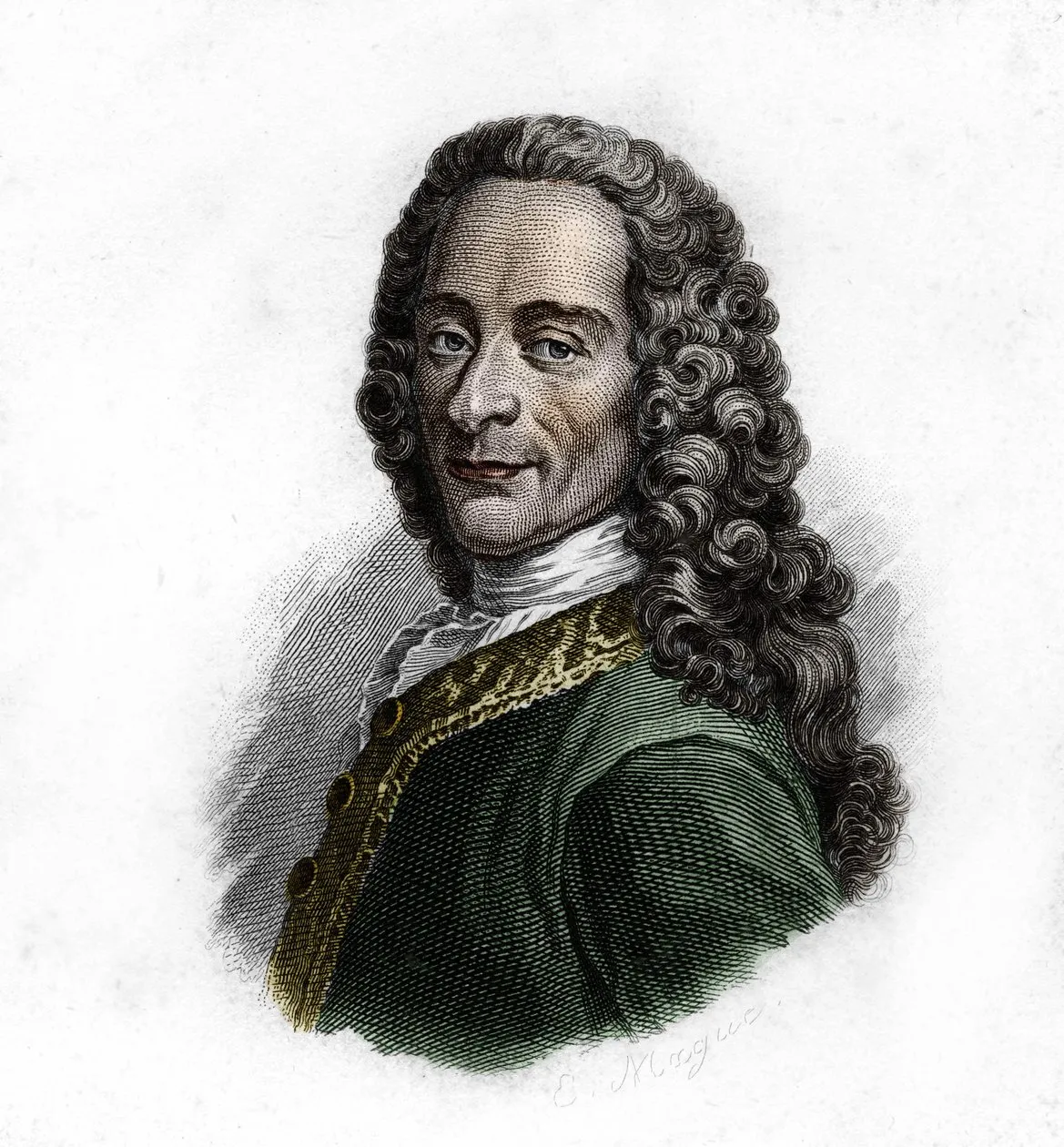 Photo: Voltaire, via www.meisterdrucke.ie
Rousseau's trajectory is particularly instructive because he was unusually self-aware about it. His early prize-winning essay arguing that the arts and sciences had corrupted rather than improved humanity was celebrated precisely because it was counterintuitive — a public intellectual arguing against public intellectualism. The paradox was commercially perfect. It was also, as Rousseau discovered, a trap from which he could not escape. Every subsequent work was measured against the provocative simplicity of that first success. When he attempted greater complexity, he was accused of inconsistency. When he maintained simplicity, he was accused of superficiality. The audience that had built the pedestal had done so at a height that made every subsequent position untenable.
Diderot spent two decades editing the Encyclopédie, a project explicitly designed to make specialist knowledge accessible to a general audience. The project was condemned by the Church, harassed by the Crown, and eventually criticized by fellow philosophes who felt that the compression required by encyclopedic format had distorted the knowledge it was meant to convey. He had been too accessible and not accessible enough simultaneously, a contradiction that no amount of editorial skill could resolve because it resided not in the work but in the audience's conflicting demands.
The Mechanism
Across these cases, and across the contemporary examples that will be familiar to any reader of American media, the mechanism is consistent enough to describe in structural terms.
The specialist possesses knowledge that the general audience wants but cannot access directly. The intermediary function — translating expertise into legible public argument — creates value, and that value generates prominence. Prominence creates demand for broader coverage. Broader coverage requires simplification. Simplification creates vulnerability to specialist criticism. Specialist criticism undermines the credibility that the prominence was built upon. Meanwhile, the prominence itself creates political and social enemies who use the credibility gap opened by specialist criticism to attack the person rather than the work.
What is notable about this sequence is that it cannot be avoided by the individual within it. The choices that produce celebrity — accessibility, breadth, willingness to speak beyond one's narrow specialty — are the same choices that produce the vulnerability to attack. The intellectual who refuses those choices does not become a public figure. The intellectual who accepts them becomes a target. There is no stable middle position, because the audience does not want one. The audience wants the authority of expertise combined with the accessibility of entertainment, and it wants those things simultaneously, even though they are in permanent tension.
The Crowd's Investment
The most uncomfortable element of this pattern is what it implies about the audience rather than the intellectual. The crowd does not simply discover public thinkers and then, disappointed, abandon them. The crowd constructs them. The elevation is purposeful, even when unconscious — and it is purposeful in a specific way.
A figure elevated to the status of public intellectual becomes a vessel for the audience's own desire for coherence. The world is complex; the expert makes it legible. The world is threatening; the expert provides frameworks for understanding the threat. This is a genuine service, and the gratitude is genuine. But the service creates a dependency that the audience eventually resents. The expert has become necessary, and necessity produces resentment in proportion to its depth.
The destruction of the public intellectual is, from this perspective, an act of liberation. The crowd is not simply punishing failure. It is reclaiming its own judgment — asserting that it was never really dependent, that the expert was always overrated, that the elevation was a mistake for which the elevated party bears responsibility. This narrative requires the pedestal. You cannot perform the liberation without first constructing what you are liberating yourself from.
This psychology has not changed in two thousand years. Cicero was not destroyed by Twitter. Rousseau was not radicalized by engagement metrics. The tools are different. The drive is identical, and it will produce the same result with whoever the current generation has most recently decided to celebrate.